City Guides
Where to Find Authentic Japanese Restaurants in Toronto
Toronto has one of Canada’s most diverse dining scenes. This guide explains how to find Japanese restaurants in the city that are genuinely connected to Japanese food culture.
June 10, 2026 · 10 min read
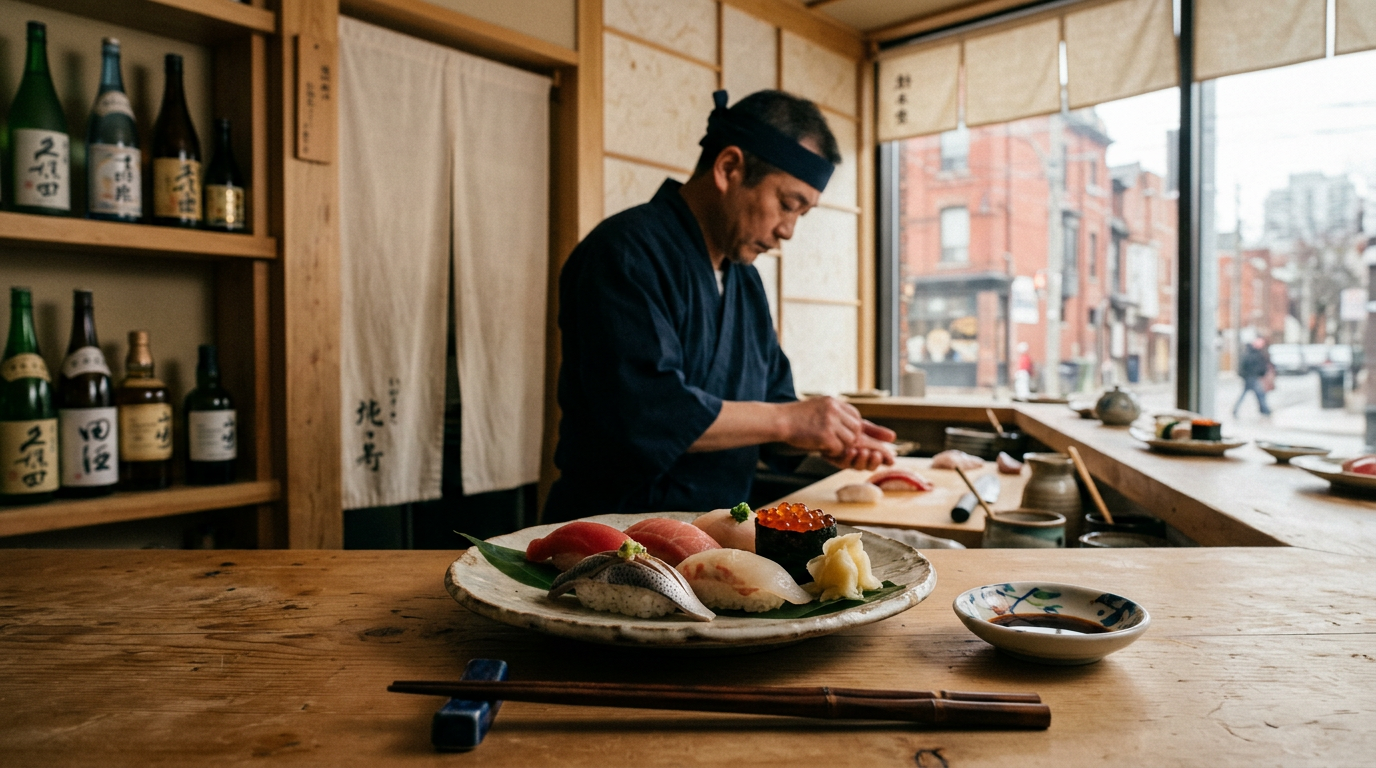
Where to Find Authentic Japanese Restaurants in Toronto
Toronto is one of North America’s most multicultural food cities, and that diversity is clearly reflected in its Japanese dining scene. The city has ramen shops, sushi counters, izakaya, omakase restaurants, Japanese curry spots, teishoku-style meals, aburi sushi, modern Japanese fine dining and casual neighbourhood restaurants.
But Toronto does not have one single “Japantown” in the way that some cities have a clearly defined Japanese restaurant district. Instead, good Japanese food is spread across several areas: downtown, Yorkville, Harbourfront, Baldwin Village, North York, Scarborough, Markham and other parts of the GTA.
That makes Toronto exciting, but also a little difficult to navigate. If you are looking for authentic Japanese restaurants, you need to know not only what to order, but also where to look.
Downtown Toronto: Izakaya, Ramen and Casual Japanese Dining
Downtown Toronto is one of the easiest places to start. Around Church Street, Dundas Street, Baldwin Village, Queen West and the Financial District, you will find many of the city’s most accessible Japanese restaurants.
This area is especially useful if you are looking for:
- Ramen
- Izakaya
- Casual sushi
- Japanese small plates
- Lunch-friendly Japanese restaurants
- After-work dining
- Sake, beer and shared plates
One of the clearest downtown categories is izakaya. KINKA Izakaya’s original Toronto location is on Church Street, near Toronto Metropolitan University and Church-Wellesley Village, and presents itself as an authentic Japanese izakaya experience in downtown Toronto. Its positioning is built around lively service, shareable Japanese plates, sushi and sake.
Kintaro Izakaya is another downtown example, located near Church and Wellesley, describing itself as offering Japanese tapas, yakitori-style charcoal grilled skewers, sushi, ramen and traditional Japanese appetizers.
For diners, downtown is a good area when you want something energetic and social rather than formal. If the goal is an after-work drink, shared plates, grilled skewers, karaage, sashimi and beer or sake, downtown Toronto is usually a strong starting point.
Baldwin Village and Dundas: A Useful Area for Casual Japanese Food
Baldwin Village and the area around Dundas Street West are useful for casual Japanese dining. This part of the city is close to the University of Toronto, hospitals, Chinatown, Kensington Market and the downtown core, which makes it a practical area for lunch, casual dinner or a lower-pressure first Japanese meal in Toronto.
This is the kind of area where you are more likely to find accessible Japanese restaurants rather than formal omakase counters. For a diner trying to understand Toronto’s everyday Japanese scene, Baldwin and Dundas are worth exploring.
Look here for:
- Casual Japanese kitchens
- Ramen
- Curry
- Donburi
- Sushi and sashimi
- Small Japanese restaurants with neighbourhood character
The key is to avoid judging only by décor or Google rating. In a casual area, the best signal is often whether the menu has a clear Japanese focus and whether fundamentals such as rice, broth and frying are handled well.
Yorkville: Omakase, Sushi Counters and High-End Japanese Dining
Yorkville is one of Toronto’s most important areas for high-end Japanese dining. The neighbourhood is associated with luxury retail, hotels, galleries and premium restaurants, so it naturally attracts more expensive sushi and omakase concepts.
This is the area to consider when you are looking for:
- Omakase
- Premium sushi
- Chef-led tasting menus
- Japanese fine dining
- High-end date-night restaurants
- More formal dining experiences
Yorkville is also home to some well-known sushi and Japanese dining addresses. Sushi Inn, for example, describes itself as Yorkville’s first-ever sushi restaurant and lists its location at 120 Cumberland Street. Miku’s sister and related Aburi concepts have also helped establish contemporary Japanese dining in Toronto, while Yorkville has become associated with a more premium sushi scene.
When choosing a Japanese restaurant in Yorkville, price alone is not enough. A high-end restaurant may be luxurious, but authenticity depends on deeper signals: chef background, rice quality, fish preparation, restraint, seasonality and whether the menu is built around Japanese culinary logic rather than luxury presentation alone.
Harbourfront and the Financial District: Contemporary Japanese and Aburi Sushi
Toronto’s Harbourfront and southern Financial District are important for contemporary Japanese dining, especially aburi-style sushi.
Miku Toronto is located at Bay and Queen’s Quay in the Harbourfront area. It presents itself as Toronto’s first and finest home of Aburi sushi and describes its Toronto location as ABURI Restaurants’ first East Coast location, bringing contemporary upscale Japanese dining to the Southern Financial District.
This area is useful if you are looking for:
- Contemporary Japanese dining
- Aburi sushi
- Business dinners
- Waterfront dining
- Upscale but accessible Japanese food
- A more polished restaurant environment
This is not necessarily the place to look for the most traditional small Japanese restaurant. It is better understood as a modern, polished version of Japanese dining in Toronto, often suitable for business meals, visitors, or diners who want a high-quality but less intimidating Japanese experience.
Scarborough and North York: Neighbourhood Japanese Food Beyond Downtown
Some of Toronto’s most interesting Japanese food is not downtown. Scarborough and North York are important because they have large residential communities, strong Asian food cultures and many neighbourhood restaurants that do not always receive the same attention as downtown or Yorkville spots.
These areas are useful for:
- Casual Japanese restaurants
- Family-style dining
- Ramen
- Sushi
- Japanese bakeries or dessert shops
- Hidden neighbourhood restaurants
- Restaurants that may serve Japanese regulars or local Asian communities
Scarborough is often mentioned by Toronto diners when discussing more authentic or old-school Japanese spots. North York is also relevant because it has a strong Asian dining scene and good access from midtown and uptown Toronto.
For Washoku Guide, these areas matter because authenticity is not always concentrated in luxury neighbourhoods. A small Japanese-run restaurant in Scarborough or North York may be more culturally meaningful than a more visible, design-heavy downtown concept.
Markham and the Wider GTA: Japanese Food Outside the City Core
For serious food exploration, it is worth thinking beyond Toronto proper. Markham and other parts of the GTA have dense Asian dining scenes and many restaurants that serve local communities rather than tourists or downtown office workers.
This matters because Toronto’s Japanese food scene does not stop at the city boundary. Many diners in the GTA will travel for good ramen, sushi, izakaya-style food or Japanese barbecue.
The wider GTA can be especially useful if you are looking for:
- Japanese barbecue
- Casual sushi
- Ramen
- Japanese-inspired but highly specialized concepts
- Restaurants serving broader Asian communities
- More suburban, car-accessible dining
The trade-off is that these restaurants may be less convenient for visitors staying downtown. But for locals, the GTA is an important part of the Japanese dining map.
What Toronto Does Especially Well
Toronto’s Japanese food scene is not identical to New York, Los Angeles, Vancouver or Tokyo. It has its own strengths.
Toronto is particularly good for:
- Ramen
- Izakaya-style dining
- Modern sushi and aburi sushi
- Omakase and premium sushi
- Casual Japanese restaurants
- Japanese food integrated into a broader multicultural dining scene
The city’s diversity is both a strength and a challenge. On the positive side, Toronto supports many different Japanese formats. On the negative side, “Japanese” is sometimes used broadly for restaurants that are actually fusion, pan-Asian or adapted mainly to local taste.
That is why diners need a more precise framework.
How to Choose by Occasion in Toronto
If you want a casual meal, start with downtown ramen, Baldwin Village, Dundas or North York.
If you want drinks and shared plates, look at downtown izakaya-style restaurants around Church-Wellesley, Queen West or central Toronto.
If you want sushi but not a very formal meal, look at Harbourfront, downtown or established neighbourhood sushi restaurants.
If you want omakase or premium sushi, Yorkville is one of the most important areas to explore.
If you want more neighbourhood-driven Japanese food, look beyond the downtown core toward Scarborough, North York and the GTA.
If you want modern Japanese dining for visitors or business, Harbourfront and the Financial District are strong options.
Specific Toronto Signals to Look For
When evaluating a Japanese restaurant in Toronto, ask:
- Is the restaurant part of a clearly Japanese concept, or is it broadly Asian fusion?
- Is the chef or ownership connected to Japanese cuisine?
- Does the menu focus on one format, such as ramen, sushi, izakaya, kaiseki or teishoku?
- Does the restaurant treat rice seriously?
- Are sauces and toppings used with restraint?
- Are Japanese terms used correctly?
- Is the restaurant known for a specific craft, such as ramen broth, yakitori, omakase or aburi sushi?
- Does the restaurant feel built around Japanese culinary logic, or around local trend appeal?
In Toronto, this distinction is important because many restaurants use Japanese elements, but not all are equally rooted in Japanese food culture.
Toronto Restaurant Types by Area
Here is a practical way to think about the city:
| Area | Best For | Dining Style |
|---|---|---|
| Downtown / Church-Wellesley | Izakaya, ramen, casual Japanese food | Lively, social, convenient |
| Baldwin / Dundas | Casual Japanese meals, ramen, donburi, curry | Informal, accessible |
| Yorkville | Omakase, premium sushi, high-end Japanese dining | Expensive, polished, chef-led |
| Harbourfront / Financial District | Contemporary Japanese, aburi sushi, business dining | Upscale, modern, visitor-friendly |
| North York | Neighbourhood Japanese food, ramen, casual dining | Local, practical, less tourist-focused |
| Scarborough | Hidden gems, casual Japanese restaurants, community dining | Neighbourhood-driven |
| Markham / GTA | Japanese BBQ, ramen, sushi, broader Asian-Japanese concepts | Suburban, car-friendly, diverse |
This structure is more useful than simply searching “best Japanese restaurant Toronto,” because the best choice depends on the type of Japanese food you want.
Authentic Does Not Always Mean Expensive
One of the biggest mistakes in Toronto is assuming that the most authentic Japanese food must be in Yorkville or at the most expensive omakase counter.
That is not true.
A casual ramen shop can be authentic. A simple izakaya can be authentic. A small teishoku-style restaurant can be authentic. A neighbourhood sushi place can be authentic if it takes rice, fish and technique seriously.
Authenticity is not about luxury. It is about connection to Japanese food culture, technique, balance and intention.
When a Toronto Japanese Restaurant May Be More Fusion-Oriented
A Toronto restaurant may be more Japanese-inspired or fusion-oriented if the menu includes many unrelated categories, such as sushi, ramen, poke, bao, Thai curry, Korean fried chicken and bubble tea all in one place.
Other warning signs include:
- Heavy sauces on most dishes
- Very large sushi rolls with many toppings
- Cream cheese, sweet glazes and fried fillings as dominant elements
- Little attention to rice quality
- No clear restaurant identity
- Strong branding but weak culinary focus
- Japanese design clichés without Japanese technique
This does not mean the restaurant is bad. It simply means it may not be the best choice if your goal is authentic Japanese dining.
A Practical Toronto Itinerary
For someone exploring Japanese food in Toronto, a useful approach would be:
Start downtown with ramen or izakaya to understand casual Japanese dining in the city.
Then try a more polished contemporary Japanese restaurant near Harbourfront or the Financial District.
Next, explore Yorkville for omakase or premium sushi.
Finally, go beyond the downtown core into North York, Scarborough or Markham to find more neighbourhood-driven Japanese food.
This gives a more complete picture of Toronto’s Japanese food scene than simply visiting one famous sushi restaurant.
Why Washoku Guide Matters in Toronto
Toronto has enough Japanese restaurants that curation matters. A standard map search will show many places, but it will not always tell you whether a restaurant is Japanese-owned, chef-led, traditional, modern, fusion, casual, premium or genuinely connected to Japanese food culture.
Washoku Guide helps make those distinctions clearer.
For Toronto, the goal is not just to list Japanese restaurants. The goal is to help diners understand what kind of Japanese restaurant they are choosing — and where in the city they are most likely to find it.
Final Thought
Toronto is a strong city for Japanese food, but it rewards diners who look carefully.
For izakaya and ramen, downtown is a natural starting point. For omakase and premium sushi, Yorkville matters. For contemporary aburi sushi and business dining, Harbourfront and the Financial District are important. For neighbourhood Japanese food, look to North York, Scarborough and the wider GTA.
The best Japanese restaurant in Toronto depends on what you are looking for. The key is to move beyond the generic label “Japanese restaurant” and ask a better question:
What kind of Japanese dining experience does this place actually represent?
Restaurants featured in this guide
Toronto
Kaminari Ramen & Bar
Kaminari is Parkdale's atmospheric Tokyo-style ramen bar, co-owned by Japanese restaurateur Daiju Matsuura of Imanishi Sando Bar. All broths are made from natural ingredients with zero MSG, and the sake program features only traditional Junmai imports from Japan — all in a minimalist space with a curated sound system.
Toronto
Hinoya Curry
Toronto outpost of Tokyo's Hinoya Curry — the Kanda-style Japanese curry specialist.
Toronto
Gyu-Kaku Japanese BBQ – Richmond Hill
Gyu-Kaku's Richmond Hill location brings Japan's premier yakiniku experience to the GTA suburbs, situated on the second floor of Times Square mall with panoramic views. Guests enjoy smokeless charcoal grills and premium meats alongside a full Japanese drinks menu.
Toronto
Hokkaido Ramen Santouka
Toronto branch of Japan's Santouka chain — the Hokkaido shio tonkotsu ramen specialist.
Toronto
Musoshin Ramen
Musoshin Ramen is Toronto's only location of a Kyoto-based ramen chain, co-owned by Aoi Yoshida and recommended by the Michelin Guide for three consecutive years. Fresh noodles are hand-made daily and the signature light vegetable broth offers a refreshing alternative to heavy tonkotsu styles.
Toronto
Kinton Ramen – North York
Kinton Ramen's North York location brings the chain's Japanese-recipe tonkotsu and miso ramen to the Yonge & Sheppard corridor. Extended Friday and Saturday hours make it a reliable go-to for late ramen cravings in North York.
Toronto
Aburi TORA
Casual aburi-sushi counter inside Yorkdale mall from the Japanese-led Aburi Restaurants group.
Toronto
Kintori Yakitori
Second-floor yakitori specialist on Bloor West — Japanese-owned, charcoal-grilled, late-service.
Toronto
Kinton Ramen – Yonge & Eglinton
Kinton Ramen's Yonge & Eglinton location brings authentic Japanese-recipe ramen to Midtown Toronto — half a block east of the busy Yonge-Eglinton intersection — making it the neighbourhood's go-to for tonkotsu and miso ramen seven days a week.
Toronto
Manpuku Modern Japanese Eatery
Long-running Japanese-owned casual eatery on McCaul — donburi, curry, and okonomiyaki in a tight dining room.
Toronto
Aburi Hana
Yorkville kaiseki room from the Aburi group — currently closed for renovation.
Toronto
Miku Toronto
Waterfront sushi room from chef Seigo Nakamura's Japanese-led Aburi group — Toronto home of the original flame-seared aburi oshi sushi.
Toronto
Gyu-Kaku Japanese BBQ – Church Street
Gyu-Kaku is Japan's most recognized yakiniku chain, bringing the tradition of smokeless charcoal tabletop grilling to downtown Toronto's Church Street. Guests grill premium marinated meats, seafood, and vegetables at their own table, accompanied by sake, shochu, and Japanese beer.
Toronto
Bar Shozan
Chef Shozan Tomikawa's intimate Ossington sake bar — a short counter menu of seasonal izakaya plates.
Toronto
Akoya Izakaya
Akoya Izakaya brings the full izakaya experience to Markham's Unionville neighbourhood, with a Japanese-trained chef at the helm and a menu spanning charcoal-grilled yakitori, fresh sushi, house-made ramen, and Japanese sake. The casual yet convivial atmosphere captures the spirit of a Japanese neighbourhood pub.
Toronto
Hakata Ikkousha Ramen Queen West
Toronto outpost of the Japanese Hakata Ikkousha chain — proper Fukuoka-style tonkotsu ramen.
Toronto
Kyushu Yakitori Izakaya
Late-night yakitori specialist in Markham — binchōtan-grilled skewers and a deep sake list for a Japanese crowd.
Toronto
Kappo Sato
Intimate kappo counter from chef Takeshi Sato — seasonal courses built around flown-in Japanese seafood and vegetables.
Toronto
Don Don Izakaya
Long-running downtown izakaya on Dundas West — a broad menu of grilled and fried Japanese pub classics.
Toronto
Miyabi Japanese Restaurant
Family-run Japanese restaurant and izakaya in Richmond Hill, open since 1994.
Toronto
Ginko Japanese Restaurant
Japanese-owned Etobicoke restaurant open since 1984 — one of Toronto's oldest traditional Japanese kitchens.
Continue reading
Best Sushi in Houston: 10 Authentic Spots (2026)
Houston’s sushi scene is much deeper than casual rolls and delivery menus. From Chef Hori’s Japanese-rooted restaurants to intimate omakase counters, hand roll bars, polished Galleria sushi rooms and modern Japanese dining, the city offers a wide range of serious sushi experiences. This guide highlights 10 Houston sushi spots worth knowing in 2026 — and explains what kind of sushi experience each one represents.
Where to Find Authentic Japanese Restaurants in New York City
New York City is one of the world’s great Japanese dining cities. East Village offers Little Tokyo-style restaurant culture, Midtown is strong for sushi, ramen and business dining, NoHo and SoHo have some of the city’s most serious omakase counters, and Brooklyn’s Japan Village brings Japanese food, groceries and casual dining together in one place. This guide explains where to look for authentic Japanese restaurants in NYC — and how to choose the right neighbourhood for sushi, ramen, izakaya, omakase, soba, yakitori and everyday Japanese food.
Where to Find Authentic Japanese Restaurants in Los Angeles
Los Angeles is one of the best cities in North America for Japanese food. Little Tokyo offers history and cultural depth, Sawtelle Japantown is a major West LA dining corridor, and Torrance and Gardena in the South Bay are home to some of the region’s most serious Japanese restaurants. This guide explains where to look for authentic Japanese restaurants in Los Angeles — from sushi and ramen to izakaya, soba, yakitori, omakase and everyday Japanese dining.