City Guides
Where to Find Authentic Japanese Restaurants in Los Angeles
From Little Tokyo and Sawtelle Japantown to Torrance, Gardena and the South Bay, Los Angeles has one of the most important Japanese dining scenes outside Japan.
June 16, 2026 · 11 min read
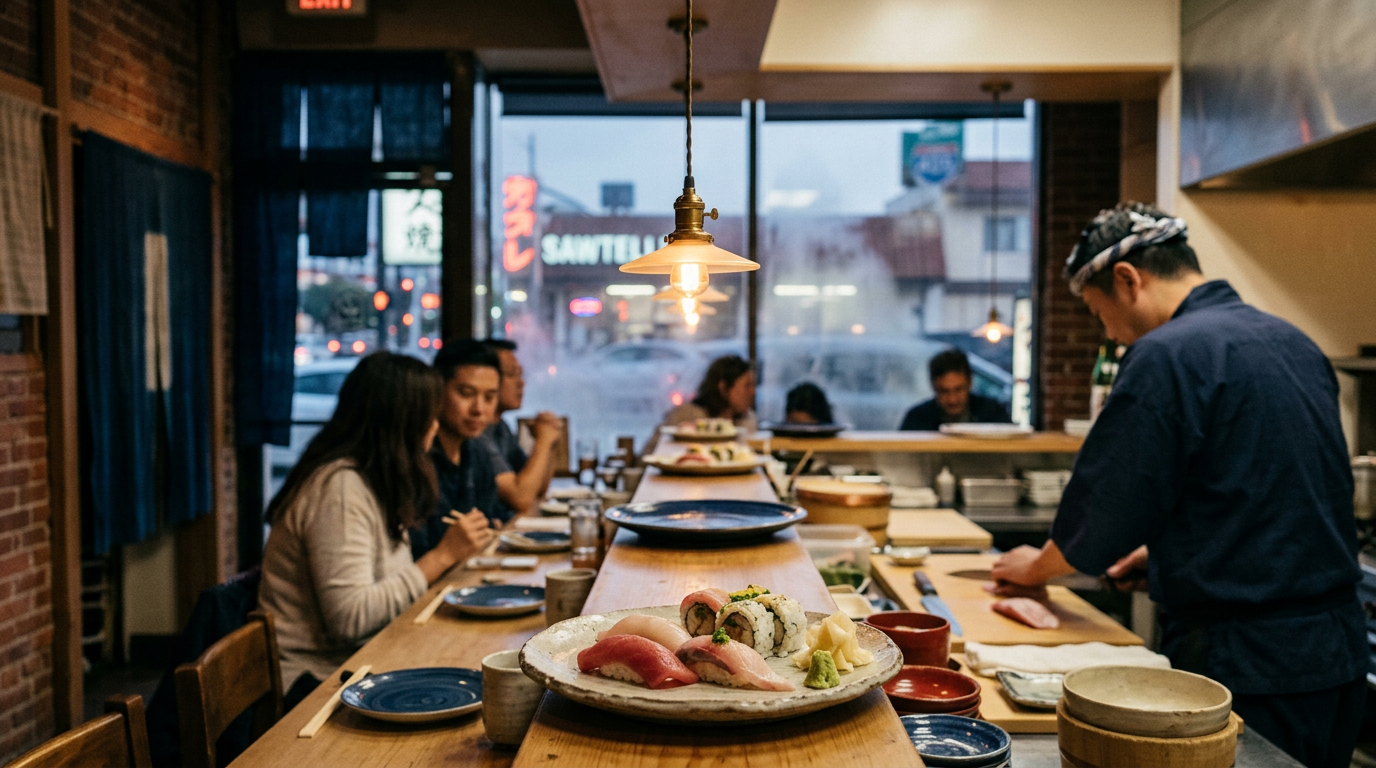
Where to Find Authentic Japanese Restaurants in Los Angeles
Los Angeles is one of the most important cities for Japanese food outside Japan. Few North American cities offer such a deep combination of historic Japanese-American culture, Japanese-owned businesses, serious sushi counters, ramen shops, izakaya, soba restaurants, yakitori, Japanese grocery stores and everyday neighbourhood dining.
But Japanese food in Los Angeles is not concentrated in just one area.
Little Tokyo is the historic and cultural anchor. Sawtelle Japantown is one of West LA’s most active Japanese dining corridors. Torrance and Gardena in the South Bay are essential for diners who want a deeper, more community-driven Japanese food experience. Beverly Hills and West Hollywood are strong for high-end sushi and omakase. Downtown LA has both traditional and modern Japanese restaurants. The San Gabriel Valley and broader LA County add even more depth.
This makes Los Angeles exciting, but also difficult to navigate. If you are looking for authentic Japanese restaurants in LA, it helps to understand the city by neighbourhood.
Little Tokyo: The Historic Heart of Japanese Food in Los Angeles
Little Tokyo is the most important starting point for understanding Japanese food in Los Angeles. It is not just a restaurant district. It is one of the historic centers of Japanese-American life in Southern California.
For diners, Little Tokyo is useful because it combines history, culture and food in one walkable area. You can find sushi, ramen, Japanese sweets, casual restaurants, izakaya-style dining, cafés, markets and long-standing local institutions.
Little Tokyo is especially useful if you are looking for:
- Ramen
- Sushi
- Casual Japanese restaurants
- Japanese sweets and snacks
- Izakaya-style meals
- Japanese-American food history
- A walkable Japanese cultural district
- Restaurants connected to a broader Japanese community
Little Tokyo is not necessarily where every “best” Japanese restaurant in LA is located. But it is the most culturally important place to start. If you want to understand why Japanese food matters in Los Angeles, Little Tokyo should be part of the journey.
How to Read Little Tokyo as a Food District
Little Tokyo has many different kinds of Japanese restaurants. Some are old-school and casual. Some are modern. Some are more tourist-facing. Others still serve local regulars.
The key is not to assume that every restaurant in Little Tokyo is automatically traditional or authentic. Like any historic food district, it includes a mix of serious restaurants, casual spots, newer concepts and places designed for visitors.
When choosing a restaurant in Little Tokyo, look for:
- A clear Japanese identity
- A focused menu
- Good fundamentals such as rice, broth, noodles or frying
- Japanese ownership or operation where possible
- Long-standing community relevance
- Dishes that reflect Japanese dining culture rather than generic Asian fusion
Little Tokyo is strongest when you approach it as both a food district and a cultural district.
Sawtelle Japantown: West LA’s Japanese Dining Corridor
Sawtelle Japantown is one of the most important Japanese food areas in Los Angeles. Located on the Westside, near Santa Monica, Brentwood and Westwood, Sawtelle is known for its concentration of Japanese and Japanese-inspired restaurants.
This area is especially strong for:
- Ramen
- Tsukemen
- Casual Japanese dining
- Japanese curry
- Sushi
- Dessert shops
- Modern Japanese concepts
- Westside dining
Sawtelle is a good place to go when you want an energetic, accessible Japanese food experience. It is not as historically deep as Little Tokyo, but it is one of the most practical and popular areas for Japanese food in LA today.
For many diners on the Westside, Sawtelle is the default Japanese food destination.
What Sawtelle Does Well
Sawtelle is especially useful for ramen and casual Japanese food. The area has helped introduce many LA diners to ramen, tsukemen, Japanese curry, izakaya-style dining and Japanese dessert culture.
It is also a good example of how Japanese food changes abroad. Some restaurants on Sawtelle are highly Japanese in focus. Others are Japanese-inspired, modern, fusion-oriented or part of a broader Asian dining landscape.
That does not make Sawtelle less interesting. It simply means diners should be precise.
If you want a more authentic experience, look for restaurants with:
- A focused Japanese concept
- Serious attention to broth, noodles, rice or technique
- A menu that does not try to cover too many unrelated cuisines
- Clear Japanese culinary influence
- Restraint rather than excessive sauces, toppings or fusion elements
Sawtelle is best understood as a lively Japanese dining corridor rather than a purely traditional restaurant district.
Torrance and Gardena: The Serious Japanese Food Zone
For many serious diners, the South Bay is one of the most important Japanese food areas in Greater Los Angeles. Torrance and Gardena have long been associated with Japanese communities, Japanese businesses and restaurants that serve local regulars rather than only tourists or trend-seeking diners.
If Little Tokyo is the historic cultural anchor and Sawtelle is the Westside dining corridor, Torrance and Gardena are where many diners go for deeper, more everyday Japanese food.
This area is especially useful for:
- Soba
- Udon
- Yakitori
- Izakaya
- Sushi
- Ramen
- Tonkatsu
- Japanese curry
- Japanese bakeries
- Japanese grocery-linked dining
- Neighbourhood restaurants serving Japanese communities
The South Bay often feels more local and less performative than some more famous LA dining areas. Many restaurants here are located in strip malls or modest commercial plazas, which is typical of great LA dining in general.
Do not judge these restaurants by exterior design. Some of the most serious Japanese food in Los Angeles can be found in simple, understated settings.
Why the South Bay Matters
Torrance and Gardena matter because authenticity is not always concentrated in the most visible or expensive neighbourhoods.
A small soba shop, yakitori restaurant, izakaya or casual Japanese lunch spot in the South Bay may offer a more culturally grounded experience than a more design-heavy restaurant in a trendier part of LA.
The South Bay is a particularly strong area when you want to explore Japanese food beyond sushi and ramen.
Look here if you are interested in:
- Everyday Japanese dining
- Restaurants with Japanese regulars
- Specialist restaurants
- Soba, udon, yakitori or izakaya
- Less tourist-driven dining
- A stronger connection to Japanese community life in LA
For Washoku Guide, Torrance and Gardena are essential. Any serious guide to Japanese food in Los Angeles should include the South Bay.
Downtown LA Beyond Little Tokyo
Downtown LA offers more than Little Tokyo alone. The broader downtown area includes modern Japanese concepts, business-friendly restaurants, sushi, ramen and contemporary dining.
This area is useful if you are looking for:
- Japanese restaurants before or after events
- Business dining
- Modern Japanese food
- Sushi and ramen near central LA
- Restaurants accessible from hotels and offices
Downtown LA can be convenient, but it is also mixed. Some restaurants are genuinely Japanese in focus, while others are more broadly Asian or fusion-driven.
As always, look for concept clarity. A serious Japanese restaurant should know what kind of Japanese food it is trying to serve.
Beverly Hills, West Hollywood and Hollywood: High-End Sushi and Omakase
Los Angeles is one of America’s great sushi cities, and some of its most famous sushi and omakase restaurants are located around Beverly Hills, West Hollywood, Hollywood and nearby central-west areas.
This part of the city is especially relevant for:
- High-end sushi
- Omakase
- Celebrity-adjacent dining
- Premium Japanese tasting menus
- Date-night restaurants
- Special occasions
But price and prestige do not automatically mean authenticity.
When evaluating a high-end sushi restaurant in LA, pay attention to:
- The chef’s background
- The rice
- The sequence of the meal
- Fish preparation
- Knife work
- Use of seasoning
- Balance and restraint
- Whether the meal feels chef-led rather than luxury-led
A serious omakase restaurant should not simply be expensive. It should show control, technique, seasonality and trust between chef and diner.
West LA and Santa Monica: Convenient, Varied and Sometimes Modern
West LA and Santa Monica offer a wide range of Japanese restaurants, from casual ramen and sushi to more modern or health-conscious Japanese-inspired concepts.
This area is convenient for visitors and locals on the Westside, but it requires careful selection. Some restaurants are traditional. Some are modern Japanese. Some are more California-Japanese or fusion-oriented.
That range is part of LA’s identity.
West LA is useful for:
- Casual sushi
- Ramen
- Japanese lunch spots
- Modern Japanese restaurants
- Health-conscious Japanese-inspired food
- Restaurants near Santa Monica, Brentwood and Westwood
For authentic Japanese dining, focus on restaurants with a clear culinary foundation rather than those relying only on design, branding or trend appeal.
San Gabriel Valley and the Broader LA Food Map
The San Gabriel Valley is better known for Chinese and broader Asian dining, but it also contributes to the wider Japanese food map of Los Angeles County.
Depending on the area, diners may find ramen, sushi, Japanese-style cafés, curry, barbecue or Japanese-inspired concepts. The SGV is not the first place most people look for traditional Japanese food, but it is part of the broader Asian dining ecosystem that makes LA so rich.
For a first-time Japanese food itinerary, Little Tokyo, Sawtelle and the South Bay are more important. But for locals and repeat visitors, the wider LA County map is worth exploring.
What Los Angeles Does Especially Well
Los Angeles is unusually strong because it offers several different versions of Japanese dining at once.
The city is especially good for:
- Sushi and omakase
- Ramen and tsukemen
- Izakaya
- Soba and udon
- Yakitori
- Japanese curry
- Japanese grocery-linked food culture
- Casual neighbourhood Japanese restaurants
- Modern Japanese-Californian adaptation
Few cities outside Japan offer this range. LA is not just a city with Japanese restaurants. It is a city with multiple Japanese dining ecosystems.
How to Choose by Neighbourhood
If you want Japanese-American history and a walkable cultural district, start with Little Tokyo.
If you want ramen, tsukemen and energetic Westside Japanese dining, go to Sawtelle Japantown.
If you want deeper neighbourhood Japanese food, specialist restaurants and community-driven dining, explore Torrance and Gardena.
If you want high-end sushi or omakase, look around Beverly Hills, West Hollywood, Hollywood and central-west LA.
If you want convenient modern Japanese dining near offices, hotels or events, Downtown LA can work well.
If you want casual Westside Japanese food, West LA and Santa Monica offer many options.
The best choice depends on what kind of Japanese experience you want.
Los Angeles Japanese Restaurant Areas at a Glance
| Area | Best For | Dining Style |
|---|---|---|
| Little Tokyo | Japanese history, ramen, sushi, casual dining, sweets | Cultural, walkable, historic |
| Sawtelle Japantown | Ramen, tsukemen, curry, casual Japanese food | Energetic, Westside, popular |
| Torrance | Soba, sushi, izakaya, ramen, neighbourhood Japanese food | Serious, local, community-driven |
| Gardena | Yakitori, izakaya, sushi, casual Japanese restaurants | Authentic, understated, South Bay |
| Beverly Hills / West Hollywood | Omakase, high-end sushi, premium Japanese dining | Expensive, polished, chef-led |
| Downtown LA | Little Tokyo plus modern Japanese dining | Central, mixed, convenient |
| West LA / Santa Monica | Casual sushi, ramen, modern Japanese concepts | Accessible, varied, sometimes fusion |
| San Gabriel Valley | Wider Asian dining context, selected Japanese spots | Diverse, suburban, exploratory |
Authentic Does Not Always Mean Expensive in LA
One of the biggest mistakes in Los Angeles is assuming that the most authentic Japanese food must be the most expensive.
That is not true.
A modest soba restaurant in the South Bay can be deeply authentic. A small ramen shop in Sawtelle can be serious. A casual izakaya in Gardena can offer a more Japanese experience than a glamorous restaurant with a large marketing budget.
Authenticity is not about luxury. It is about technique, focus, cultural connection and respect for the cuisine.
Warning Signs: When an LA Japanese Restaurant May Be More Fusion-Oriented
Los Angeles is a creative food city, so fusion is everywhere. Some fusion restaurants are excellent. But they are not the same as traditional Japanese restaurants.
A Japanese restaurant may be more fusion-oriented if it has:
- A very broad pan-Asian menu
- Sushi, ramen, poke, bao, Korean fried chicken and Thai-style dishes together
- Heavy sauces on most items
- Large rolls with many toppings
- Cream cheese, fried fillings and sweet glazes as dominant sushi elements
- More focus on visual impact than technique
- No clear restaurant identity
- Japanese branding without Japanese culinary substance
This does not mean the restaurant is bad. It simply means it may not be the right choice if your goal is authentic Japanese dining.
A Practical Los Angeles Japanese Food Itinerary
For a first serious exploration of Japanese food in Los Angeles, a useful itinerary might look like this:
Start in Little Tokyo to understand the cultural and historical foundation of Japanese food in LA.
Then visit Sawtelle Japantown for ramen, tsukemen or Japanese curry.
Next, go to Torrance or Gardena for neighbourhood Japanese food, soba, yakitori, izakaya or a more community-driven dining experience.
Finally, book a sushi counter or omakase experience in Beverly Hills, West Hollywood or another central-west neighbourhood.
This route gives a much better understanding of LA’s Japanese food scene than simply searching for “best sushi near me.”
How Washoku Guide Helps in Los Angeles
Los Angeles has so many Japanese restaurants that curation becomes essential.
A standard map search can show hundreds of restaurants, but it often does not explain whether a place is Japanese-owned, chef-led, traditional, modern, fusion, neighbourhood-focused or mainly adapted to local taste.
Washoku Guide helps diners make better distinctions.
For Los Angeles, that means looking beyond ratings and asking better questions:
- Is the restaurant connected to Japanese food culture?
- Is the chef trained in Japanese cuisine?
- Does the menu have a clear focus?
- Does the restaurant specialize?
- Are rice, broth, noodles, fish or grilling handled seriously?
- Is the concept traditional, modern or fusion?
- Does the restaurant serve a local Japanese community, a general LA audience, or both?
These questions matter because LA has both some of the best Japanese food outside Japan and many restaurants that are only loosely Japanese-inspired.
Final Thought
Los Angeles is one of the best cities in North America for Japanese food, but it is not a single-scene city.
Little Tokyo offers history. Sawtelle offers Westside energy. Torrance and Gardena offer depth and community. Beverly Hills and West Hollywood offer high-end sushi and omakase. Downtown LA and West LA add convenience and variety.
The best Japanese restaurant in Los Angeles depends on what you are looking for.
If you want to eat well, do not only ask: “What is the best Japanese restaurant in LA?”
Ask a more precise question:
What part of Japanese food culture do I want to experience — and which LA neighbourhood does it best?
Restaurants featured in this guide
Los Angeles
Izakaya Hachi
A 'quintessential post-work izakaya' in Torrance by Take Five USA — grilled skewers, fresh oysters, shabu-shabu, and pork cheek in a setting that draws Honda employees and the South Bay Japanese community.
Los Angeles
Daikokuya - Sawtelle
The Sawtelle outpost of Daikokuya, bringing Bishamon Group's signature Hakata tonkotsu ramen to Sawtelle Japantown since 2014.
Los Angeles
Coco Ichibanya
CoCo Ichibanya's Sawtelle location — authentic Japanese curry rice from the world's largest Japanese curry chain, with fully customizable spice levels and toppings.
Los Angeles
Fuji Omakase (also known as Fuji Japanese Restaurant
A 2024-opened omakase in Monterey Park by Japan-trained chefs — Gifu Hida A5 Wagyu, overnight-aired fish, and Kyoto Zuiko ceramics at accessible SGV price points.
Los Angeles
ippudo V West Hollywood
The second fully vegan Ippudo outpost in the world — Hakata-style tonkotsu broth reinvented with plant-based ingredients by Japan's legendary ramen brand.
Los Angeles
Chinchikurin Little Tokyo
The Little Tokyo outpost of Hiroshima's Chinchikurin okonomiyaki chain — Hiroshima-style savory pancakes with yakisoba, crispy egg, and Kewpie mayo on a teppan grill.
Los Angeles
Hollywood Shin Sushi & Ramen
A neighborhood Japanese restaurant on North La Brea Avenue in Hollywood serving ramen, sushi, and teriyaki, operated by an owner raised in Japan.
Los Angeles
Hokkaido Ramen Santouka
Santouka's Torrance location inside Mitsuwa Marketplace — Hokkaido-style shio and miso ramen from a Japanese chain founded in Asahikawa in 1988.
Los Angeles
Hana Ichimonme Kyoto Ramen
A Little Tokyo ramen institution since 1986 — Kyoto-style lighter broth ramen in a neighborhood defined by heavier tonkotsu, offering a quieter regional Japanese noodle tradition.
Los Angeles
Eigikutei Omakase Sushi & Shabu-Shabu Kaiseki
A 2023-opened omakase sushi and shabu-shabu kaiseki counter in Little Tokyo — combining Edomae sushi and Japanese hot-pot dining in a single prix-fixe experience.
Los Angeles
Anzu Japanese Gourmet
A small Sawtelle counter specializing in Japanese fried chicken (karaage) and curry rice bowls — the sister concept to Menya Tigre on Sawtelle.
Los Angeles
Furaibo
A Sawtelle Japantown stalwart since 1987, Furaibo is the neighborhood's go-to for Nagoya-style tebasaki — crispy, seasoned chicken wings — and cold draft beer.
Los Angeles
Hama Sushi
A traditional sushi bar on 2nd Street in Little Tokyo — straightforward Japanese sushi and sashimi in the heart of LA's Japanese neighborhood.
Los Angeles
Izakaya Osen Irvine
An authentic Japanese izakaya in Irvine since 2022 — kushiyaki, sashimi, and daily-flown Japanese fish in a traditional sake-bar format run by the Japanese-trained Osen Group.
Los Angeles
Asanebo
Chef Tetsuya Nakao's Studio City sushi institution since 1991 — a Michelin-listed restaurant that helped establish the San Fernando Valley's reputation for serious Japanese omakase.
Los Angeles
AFURI ramen + dumpling Culver City
The Culver City outpost of Tokyo's acclaimed AFURI ramen — known for its yuzu shio broth, clean umami-forward bowls, and house-made noodles.
Continue reading
Best Sushi in Houston: 10 Authentic Spots (2026)
Houston’s sushi scene is much deeper than casual rolls and delivery menus. From Chef Hori’s Japanese-rooted restaurants to intimate omakase counters, hand roll bars, polished Galleria sushi rooms and modern Japanese dining, the city offers a wide range of serious sushi experiences. This guide highlights 10 Houston sushi spots worth knowing in 2026 — and explains what kind of sushi experience each one represents.
Where to Find Authentic Japanese Restaurants in New York City
New York City is one of the world’s great Japanese dining cities. East Village offers Little Tokyo-style restaurant culture, Midtown is strong for sushi, ramen and business dining, NoHo and SoHo have some of the city’s most serious omakase counters, and Brooklyn’s Japan Village brings Japanese food, groceries and casual dining together in one place. This guide explains where to look for authentic Japanese restaurants in NYC — and how to choose the right neighbourhood for sushi, ramen, izakaya, omakase, soba, yakitori and everyday Japanese food.
Where to Find Authentic Japanese Restaurants in Toronto
Toronto has a broad Japanese dining scene, but the best places are spread across very different parts of the city. Downtown is strong for ramen, izakaya and casual Japanese dining; Yorkville has become a destination for high-end sushi and omakase; Harbourfront is known for contemporary aburi sushi; and Scarborough, North York and the wider GTA offer more neighbourhood-driven Japanese food. This guide explains where to look — and how to recognize restaurants with a real connection to Japanese cuisine.