← All cities
Hungary

Budapest.

Budapest's Japanese dining scene is small but earnest — chef-led sushi counters and izakaya rooms rooted in tradition. Selected for authenticity, not hype.

At a glance
Curated
13
Types
4
Filter by authenticity
Filter by type
Filter by price
01
NOBU Budapest — authentic japanese-peruvian fusion restaurant in Budapest, Inner City (District V)

NOBU Budapest

¥¥¥¥
Inner City (District V) · Sushi · a la carte
Japanese-Peruvian fusionBlack cod misoFine diningKempinski HotelCentral Europe

Opened in 2010 as the first Nobu restaurant in Central Europe, NOBU Budapest at the Kempinski Hotel Corvinus brings Nobuyuki Matsuhisa's Japanese-Peruvian culinary universe – black cod with miso, yellowtail jalapeño, rock shrimp tempura – to Budapest's most iconic luxury hotel.

View restaurant →
03
Kakurega — authentic omakase sushi restaurant in Budapest, District V – Arany János utca

Kakurega

¥¥¥
District V – Arany János utca · Sushi · counter
Omakase sushiCounter sushiWagyu grillsTonkatsuSake cocktails

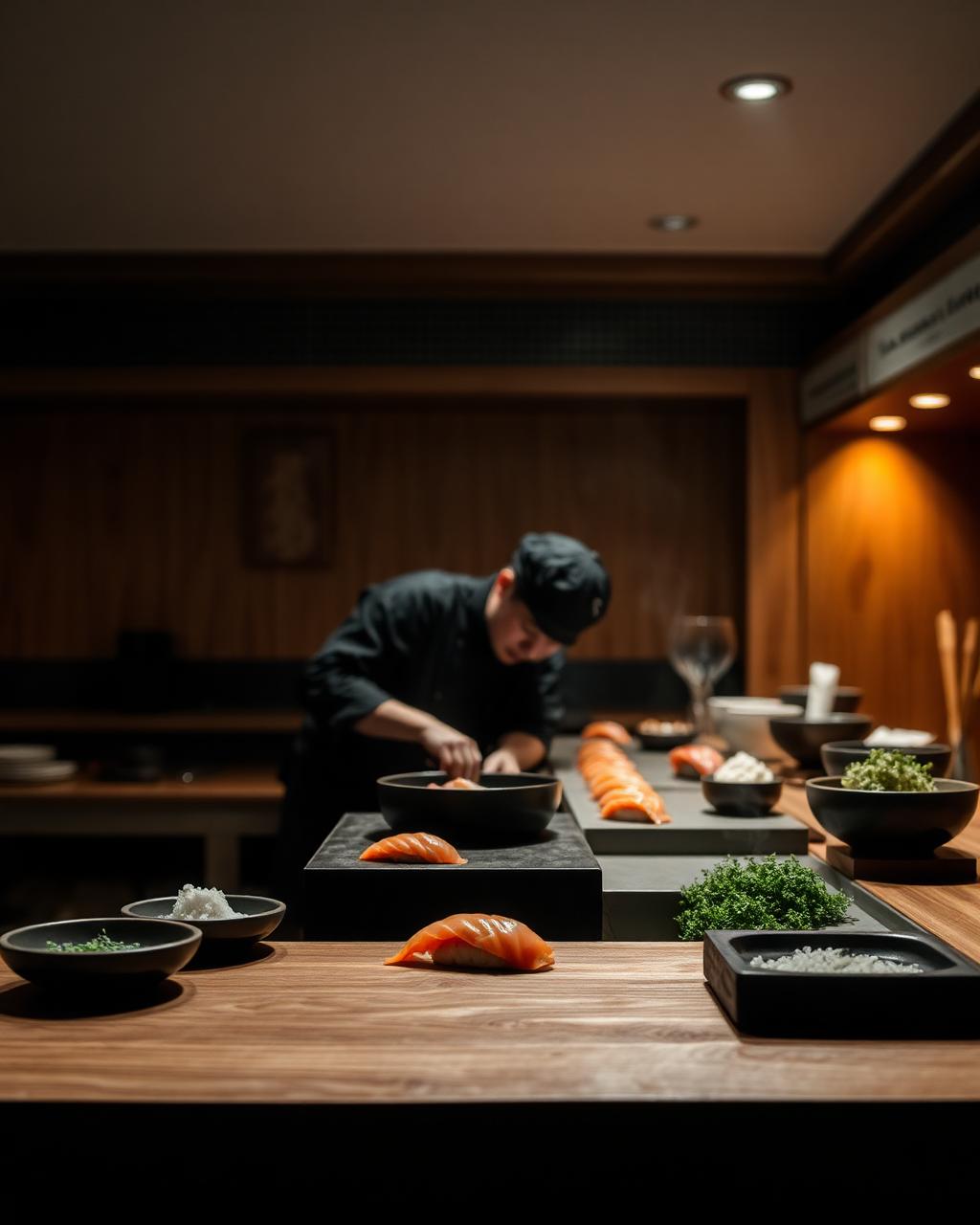
Kakurega (隠れ家, 'hideaway') is a secretive basement sushi counter tucked beneath the Opium club on Arany János Street, combining omakase-style counter dining with wagyu, tonkatsu, and seasonal Japanese cocktails. The chef prepares sushi directly in front of guests in classic Japanese fashion.

View restaurant →
07
Noriko Sushibar — authentic traditional japanese sushi restaurant in Budapest, Buda (District II)

Noriko Sushibar

¥¥
Buda (District II) · Sushi · counter
Traditional Japanese sushiNigiriMakiSashimiSushi courses

Noriko Sushibar is a beloved Buda sushi institution where Japanese chef-owner Noriko has been crafting traditional nigiri, maki and sashimi in the Rózsakert Shopping Mall for over fifteen years, with sushi made freshly in front of customers and private cooking courses available.

View restaurant →
08
Okuyama No Sushi — authentic edomae sushi restaurant in Budapest, Óbuda (District III)

Okuyama No Sushi

¥¥
Óbuda (District III) · Sushi · counter
Edomae sushiNigiriSashimiJapanese chef-ownerTokyo-style

Hidden in the basement of a small Óbuda shopping centre, Okuyama No Sushi is widely considered the only genuinely authentic sushi restaurant in Hungary – a purist operation run solo by Japanese master chef Sachi Okuyama, whose meticulous rice technique and impeccably sourced fish rival top Tokyo sushi bars.

View restaurant →
09
Sushi Sei — authentic authentic japanese sushi restaurant in Budapest, Óbuda (District III)

Sushi Sei

¥¥
Óbuda (District III) · Sushi · a la carte
Authentic Japanese sushiKaiseki-influencedTempuraJETRO featuredÓbuda

Founded in 2000 by Himeji-born chef Seiichi Kusumoto – who trained for a decade in Osaka sushi and kaiseki restaurants – Sushi Sei remains Budapest's most enduring Japanese chef-led restaurant and a JETRO-recognised authentic Japanese dining destination.

View restaurant →
10
Snack Masako — authentic japanese sake bar & izakaya restaurant in Budapest, Buda (District II)

Snack Masako

¥
Buda (District II) · Izakaya · casual
Japanese sake bar & izakayaSakeOnigiriJapanese-ownedBuda bar

Snack Masako is a rare authentic Japanese 'snack bar' – a cosy izakaya-style drinking space opened in 2022 by Japanese owner Natsuko in Buda, personally praised by Japan's Ambassador Kimura Tetsuya for faithfully recreating Japanese drinking culture in Budapest.

View restaurant →
13
Don Doko Don — authentic japanese donburi restaurant in Budapest, District VIII – Kálvin tér

Don Doko Don

¥
District VIII – Kálvin tér · Donburi · casual
Japanese donburiGyūdonTeriyaki donburiJapanese curryMiso soup

Don Doko Don is a compact Japanese donburi street-food bistro near Kálvin tér, run by Japanese chefs as confirmed by the restaurant's own social media and verified by a local Japanese resident review. The tight menu of gyūdon, teriyaki chicken, nikujaga and Japanese curry prioritises daily freshness and authentic seasoning.

View restaurant →
FAQ

Questions, answered.

What makes a Japanese restaurant in Budapest authentic?
In Budapest, we look for the same signals we apply globally: a chef grounded in Japanese technique, ingredients and preparation consistent with Japanese practice, and a focused format (sushi-ya, ramen-ya, izakaya, kaiseki, etc.) rather than a generalist Asian menu. Local sourcing is fine — what matters is how the kitchen treats the tradition.
How do you define authenticity?
Washoku Guide defines authenticity by the kitchen's grounding in Japanese culinary tradition: trained chefs (often in Japan), techniques and ingredients consistent with Japanese practice, a focused menu rather than a pan-Asian one, and a coherent dining format (sushi-ya, ramen-ya, izakaya, kaiseki, etc.). We weigh these signals together — no single factor decides.
Do you require Japanese ownership?
No. Japanese ownership is one positive signal, but it is not required. We also recognise restaurants with Japanese-led kitchens or non-Japanese chefs who have trained extensively in Japan and apply traditional techniques with discipline. What matters is the cooking, not the passport.
How are restaurants selected?
Each entry is researched and chosen by Washoku Guide editors — not voted in, not paid for, and not algorithmically ranked. We read kitchen biographies, study menus, talk to people in the industry, and visit when possible. Restaurants pay nothing to be listed.
Are the listings ranked?
No. Washoku Guide is a curated guide, not a ranking. Order on a city page is editorial and may change as the guide evolves; it does not imply that #1 is better than #5. Every listed restaurant has met our authenticity bar.
How often is the Budapest guide updated?
We revisit each city periodically and update entries when restaurants open, close, change hands, or change kitchens. If you spot something out of date, please let us know.