City Guides
Where to Find Authentic Japanese Restaurants in New York City
From East Village izakaya and ramen to Midtown sushi counters, NoHo omakase, Brooklyn’s Japan Village and Queens neighbourhood gems, New York has one of the deepest Japanese dining scenes outside Japan.
June 18, 2026 · 12 min read
Where to Find Authentic Japanese Restaurants in New York City
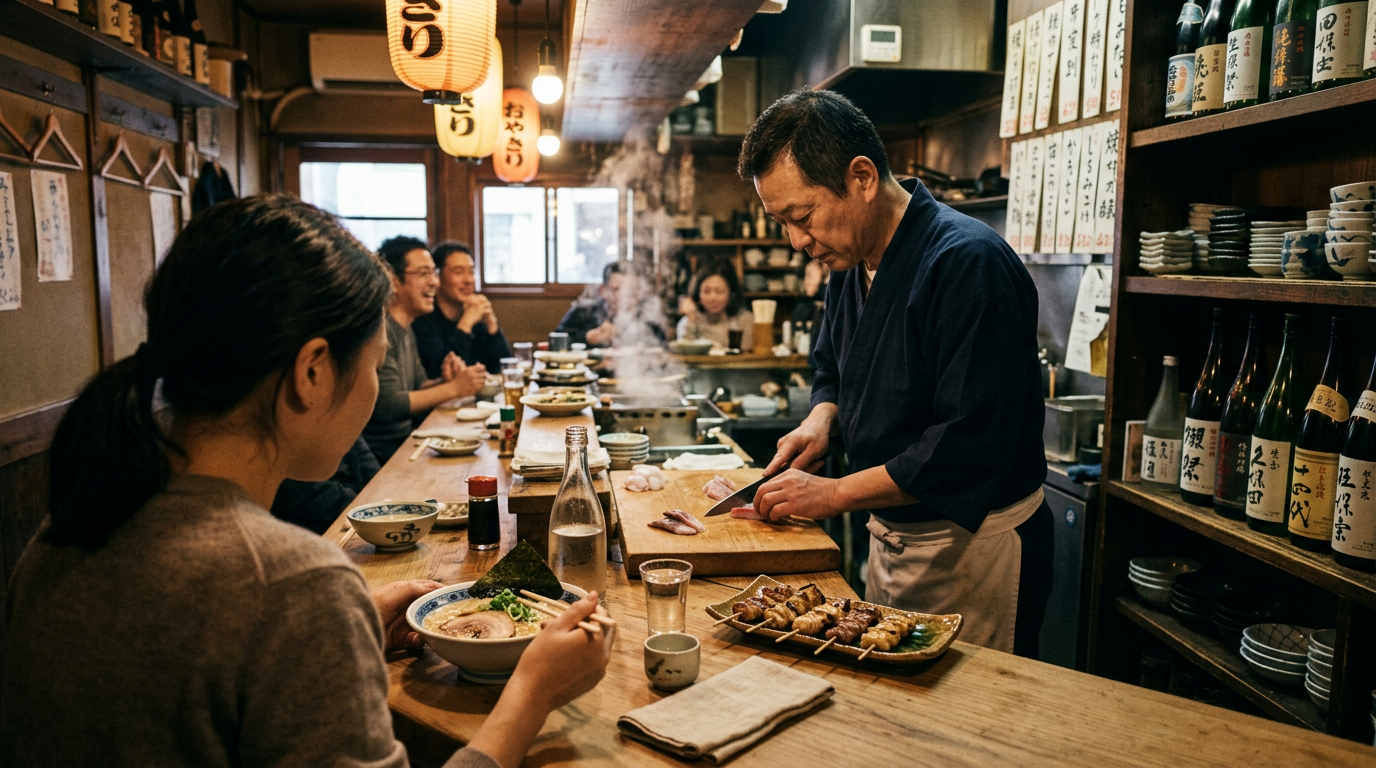
New York City is one of the best places in the world to eat Japanese food outside Japan. The city has serious sushi counters, ramen shops, izakaya, soba restaurants, yakitori, kaiseki-style dining, Japanese curry, handroll bars, casual neighbourhood restaurants and some of the most ambitious omakase experiences in North America.
But Japanese food in New York is not concentrated in one simple district.
East Village has long been associated with New York’s Little Tokyo-style Japanese restaurant culture. Midtown is important for sushi, ramen and business-friendly Japanese dining. NoHo, SoHo, Tribeca and the Flatiron area have become strong for high-end sushi and omakase. The Upper East Side has some of the city’s most refined Japanese counters. Brooklyn adds Japan Village, ramen, izakaya-style restaurants and creative Japanese dining. Queens and parts of New Jersey add another layer of neighbourhood Japanese food and commuter-community restaurants.
That makes New York exciting, but also complex. If you are looking for authentic Japanese restaurants in NYC, it helps to understand the city by neighbourhood and dining style.
East Village: New York’s Little Tokyo-Style Japanese Food Area
East Village is the most important starting point for Japanese food culture in Manhattan. The area around East 9th Street, St. Marks Place, Second Avenue and the surrounding blocks has long been associated with Japanese restaurants, bars, grocery shops and casual dining.
East Village is especially useful if you are looking for:
- Izakaya
- Ramen
- Soba
- Casual sushi
- Japanese curry
- Yakitori-style food
- Japanese sweets and cafés
- Late-night Japanese dining
- Small, characterful restaurants
Historically, East Village became known for Japanese dining through restaurants such as Mie, Sapporo East and Hasaki, which helped shape the neighbourhood’s Little Tokyo identity. Today, the area remains one of the most natural places in New York to start exploring Japanese food beyond expensive sushi counters.
East Village is not purely traditional. Some restaurants are deeply Japanese in spirit, while others are modern, adapted or fusion-oriented. But as a district, it remains one of the city’s strongest concentrations of Japanese dining.
How to Approach East Village
East Village is best for diners who want variety, informality and atmosphere.
This is a good neighbourhood when you want:
- A casual Japanese dinner
- Drinks and shared plates
- Ramen before or after going out
- A small independent restaurant
- A less formal introduction to Japanese food
- A neighbourhood that can be explored on foot
The strongest East Village restaurants usually have a clear identity. They may focus on ramen, soba, izakaya food, sushi, yakitori or Japanese comfort food. A focused restaurant is usually a better sign than a very broad pan-Asian menu.
When choosing in East Village, look for places that feel specific rather than generic. A serious ramen shop, soba restaurant or izakaya will usually understand its category and not try to be everything at once.
Midtown: Sushi, Ramen and Business-Friendly Japanese Dining
Midtown is another essential area for Japanese restaurants in New York. Because of its office density, hotels, transit connections and business traffic, Midtown has long supported sushi restaurants, ramen shops, izakaya-style restaurants and higher-end Japanese dining.
Midtown is especially useful for:
- Sushi lunches
- Business dinners
- Ramen near offices and transit
- Izakaya after work
- Hotel-friendly Japanese dining
- More polished Japanese restaurants
- Convenient central Manhattan meals
Midtown’s Japanese scene is broad. You can find casual ramen, classic sushi, high-end omakase, hidden izakaya-style restaurants and restaurants designed for business clients.
The challenge is that Midtown also has many restaurants aimed at convenience rather than authenticity. A central location and high price do not automatically mean a restaurant is serious.
Look for:
- Clear chef background
- A focused sushi, ramen or izakaya concept
- Strong rice or broth fundamentals
- Seasonal menus
- Restraint in sauces and toppings
- A restaurant identity that is more specific than “Japanese and Asian fusion”
Midtown works best when you need quality and convenience together.
NoHo, SoHo and Tribeca: Omakase and High-End Japanese Dining
Some of New York’s most serious omakase and high-end sushi restaurants are found around NoHo, SoHo, Tribeca and nearby downtown Manhattan neighbourhoods.
This part of the city is especially relevant for:
- Omakase
- High-end sushi counters
- Chef-led tasting menus
- Special occasion dining
- Minimalist Japanese interiors
- Premium seafood and seasonal menus
- Serious reservation-driven restaurants
New York has become one of the most competitive omakase cities in the world. Some restaurants follow more traditional Edomae sushi principles. Others are modern, luxury-driven or globally influenced.
When evaluating omakase in these neighbourhoods, do not judge only by price, design or exclusivity.
A serious omakase experience should show:
- Strong rice technique
- Thoughtful fish preparation
- Clear pacing
- Seasonal progression
- Controlled seasoning
- Knife work
- Balance between rice and topping
- A chef-led experience rather than a luxury performance alone
Omakase can be excellent in New York, but it is also a category where marketing can easily become louder than substance. The best restaurants are not just expensive. They are technically precise.
Upper East Side: Refined Sushi and Quiet Seriousness
The Upper East Side is important for refined Japanese dining, especially sushi and omakase. Compared with East Village or Midtown, the atmosphere is often quieter and more polished.
The area is useful for:
- High-end sushi
- Mature dining rooms
- Special occasions
- Refined omakase
- Traditional service
- Less nightlife-driven Japanese dining
Some of New York’s most respected sushi destinations have been associated with this part of Manhattan. The Upper East Side is a good area when you want a controlled, elegant and serious Japanese dining experience rather than an energetic casual night out.
As always, authenticity depends on technique and culinary foundation, not just neighbourhood prestige. A high-end address should still be evaluated by rice, fish, pacing, chef background and restraint.
Lower East Side and Chinatown Border: Modern, Casual and Experimental Japanese Dining
The Lower East Side and the edges around Chinatown have become useful for modern Japanese dining, casual sushi, ramen, handroll concepts and younger, more experimental restaurants.
This area is especially good for:
- Casual sushi
- Handroll bars
- Modern Japanese concepts
- Ramen
- Japanese-inspired small plates
- Younger dining crowds
- More flexible, less formal meals
The Lower East Side is not where you should expect every restaurant to be traditional. It is better understood as an area where Japanese food interacts with New York’s broader creative dining culture.
That can be positive when the restaurant is transparent and skilled. A modern Japanese restaurant can still be meaningful if it understands Japanese technique and uses adaptation intelligently.
The warning sign is not modernity. The warning sign is lack of focus.
Brooklyn: Japan Village, Ramen, Izakaya and Creative Japanese Food
Brooklyn has become increasingly important for Japanese food in New York. The most obvious anchor is Japan Village at Industry City in Sunset Park, which brings together Japanese food stalls, groceries, bakery/café options, restaurants and bars. It is designed as a “taste of Japan” destination and includes ramen, sushi, bento and other Japanese food formats. :contentReference[oaicite:1]{index=1}
Brooklyn is useful for:
- Casual Japanese food
- Food hall-style exploration
- Japanese groceries and snacks
- Ramen
- Sushi
- Izakaya-style restaurants
- Creative Japanese restaurants
- Family-friendly Japanese food experiences
Japan Village is particularly useful for diners who want a broader Japanese food environment rather than only one restaurant. It is not the same as a historic Japantown, but it gives Brooklyn a clear Japanese dining and shopping anchor.
Beyond Industry City, Brooklyn also has a growing range of Japanese restaurants in areas such as Williamsburg, Greenpoint, Park Slope, Fort Greene and Downtown Brooklyn. These can range from traditional to modern and fusion-oriented.
Brooklyn is best approached as a mixed Japanese dining ecosystem: part casual, part creative, part neighbourhood-driven.
Queens: Neighbourhood Japanese Dining and Everyday Options
Queens is not usually the first borough visitors think of for Japanese food, but it should not be ignored. Queens is one of the most diverse food areas in the world, and Japanese restaurants appear within a broader Asian and immigrant dining landscape.
Queens is useful for:
- Casual sushi
- Ramen
- Japanese curry
- Neighbourhood restaurants
- Lower-pressure local dining
- Restaurants serving residents rather than tourists
The Japanese food scene in Queens is more dispersed than in East Village or Midtown. The best approach is to look by neighbourhood and restaurant type rather than expecting one obvious Japanese district.
Queens can be especially interesting for diners who live in New York and want everyday Japanese meals outside Manhattan.
New Jersey Connection: Fort Lee, Edgewater and Commuter Japanese Dining
A serious New York-area Japanese food map should also acknowledge the New Jersey side, especially areas such as Fort Lee, Edgewater and nearby communities along the Hudson.
These areas are not New York City, but they are part of the broader metropolitan Japanese dining ecosystem. They are relevant for:
- Sushi
- Ramen
- Japanese supermarkets and food courts
- Casual Japanese dining
- Restaurants serving Japanese and Korean-Japanese local communities
- Car-accessible dining outside Manhattan
For visitors staying in Manhattan, New Jersey may not be practical. For locals, it can be an important extension of the Japanese food map.
What New York Does Especially Well
New York’s Japanese food scene is unusually strong because it combines several different dining worlds at once.
The city is especially good for:
- Omakase and high-end sushi
- Ramen
- Izakaya
- Soba
- Handroll bars
- Japanese curry
- Contemporary Japanese dining
- Casual neighbourhood Japanese restaurants
- Japanese food halls and groceries
- Chef-driven modern Japanese concepts
New York is not only a sushi city, although sushi is one of its great strengths. It is also a city where Japanese food appears in many different formats, price levels and neighbourhoods.
How to Choose by Neighbourhood
If you want Japanese restaurant culture with history and walkability, start in East Village.
If you want sushi, ramen or business-friendly Japanese dining in central Manhattan, look at Midtown.
If you want serious omakase or high-end sushi, explore NoHo, SoHo, Tribeca, the Upper East Side and selected Midtown counters.
If you want modern Japanese dining and handroll bars, look around the Lower East Side, SoHo and downtown Manhattan.
If you want a Japanese food hall, groceries and casual exploration, go to Japan Village in Brooklyn.
If you want more everyday neighbourhood Japanese food, look beyond Manhattan into Brooklyn, Queens and the New Jersey side.
The best choice depends on what kind of Japanese experience you want.
New York Japanese Restaurant Areas at a Glance
| Area | Best For | Dining Style |
|---|---|---|
| East Village | Izakaya, ramen, soba, casual sushi, Japanese cafés | Historic, walkable, informal |
| Midtown | Sushi, ramen, izakaya, business dining | Convenient, central, mixed |
| NoHo / SoHo / Tribeca | Omakase, premium sushi, chef-led dining | Expensive, refined, reservation-driven |
| Upper East Side | High-end sushi, quiet omakase, refined dining | Polished, serious, elegant |
| Lower East Side | Handroll bars, modern Japanese, casual sushi | Younger, creative, less traditional |
| Brooklyn / Industry City | Japan Village, groceries, ramen, casual Japanese food | Exploratory, food hall, family-friendly |
| Queens | Neighbourhood Japanese food, ramen, sushi | Local, dispersed, practical |
| Fort Lee / Edgewater | Japanese groceries, sushi, ramen, suburban dining | Metro-area, car-friendly |
Authentic Does Not Always Mean Expensive in New York
New York has some of the most expensive Japanese restaurants in the world. But authenticity is not the same as price.
A small East Village soba restaurant can be authentic. A casual Midtown izakaya can be authentic. A Brooklyn ramen shop can be authentic. A Queens neighbourhood sushi restaurant can be authentic if it respects rice, fish and technique.
Authenticity is about culinary foundation, not luxury.
The key questions are:
- Does the restaurant have a clear Japanese identity?
- Is the chef or ownership connected to Japanese cuisine?
- Does the menu have focus?
- Are the fundamentals handled well?
- Is the food balanced rather than overloaded?
- Does the restaurant respect the category it belongs to?
A restaurant does not need to be formal to be serious.
Warning Signs: When a New York Japanese Restaurant May Be More Fusion-Oriented
New York is a creative dining city, and fusion is part of the landscape. That can be exciting, but it should be understood clearly.
A restaurant may be more Japanese-inspired or fusion-oriented if it has:
- A very broad pan-Asian menu
- Sushi, ramen, poke, bao, Korean fried chicken and Thai-style dishes together
- Heavy sauces on most items
- Large sushi rolls with many toppings
- Cream cheese, fried fillings and sweet glazes as dominant sushi elements
- More focus on visual impact than technique
- No clear restaurant identity
- Japanese branding without Japanese culinary substance
This does not mean the restaurant is bad. It simply means it may not be the best choice if your goal is authentic Japanese dining.
A Practical New York Japanese Food Itinerary
For a first serious exploration of Japanese food in New York City, a useful itinerary might look like this:
Start in East Village for ramen, izakaya or soba and to understand the city’s Little Tokyo-style restaurant culture.
Then try Midtown for sushi, ramen or an after-work izakaya experience.
Next, book a serious omakase counter in NoHo, SoHo, Tribeca, Midtown or the Upper East Side.
Then visit Japan Village in Brooklyn for Japanese food stalls, groceries and a more casual cultural food environment.
Finally, explore Queens or the New Jersey side for neighbourhood Japanese dining outside the most obvious Manhattan restaurant map.
This approach gives a broader picture of New York Japanese food than simply booking one expensive sushi dinner.
How Washoku Guide Helps in New York
New York has so many Japanese restaurants that curation is essential.
A standard map search can show hundreds of places, but it rarely explains whether a restaurant is Japanese-owned, chef-led, traditional, modern, fusion, neighbourhood-focused or mainly adapted to local taste.
Washoku Guide helps diners make better distinctions.
For New York, that means looking beyond ratings and asking better questions:
- Is the restaurant meaningfully connected to Japanese food culture?
- Is the chef trained in Japanese cuisine?
- Does the menu have a clear focus?
- Is it sushi, ramen, izakaya, soba, kaiseki, teishoku or fusion?
- Are rice, broth, noodles, fish or grilling handled seriously?
- Does the restaurant serve a local Japanese community, a general New York audience or both?
- Is the concept traditional, modern or Japanese-inspired?
These questions matter because New York has both some of the best Japanese food outside Japan and many restaurants that are only loosely Japanese-inspired.
Final Thought
New York City is one of the world’s great Japanese dining cities, but it is not a single-neighbourhood scene.
East Village offers Japanese restaurant culture and walkability. Midtown offers convenience and range. NoHo, SoHo, Tribeca and the Upper East Side offer serious sushi and omakase. Brooklyn adds Japan Village and creative Japanese dining. Queens and the wider metro area add everyday neighbourhood depth.
The best Japanese restaurant in New York depends on what you are looking for.
Do not only ask: “What is the best Japanese restaurant in NYC?”
Ask a more precise question:
What part of Japanese food culture do I want to experience — and which New York neighbourhood does it best?
Restaurants featured in this guide
New York
Afuri Ramen + Dumpling (Midtown Manhattan)
Tokyo-born Afuri Ramen's upcoming Midtown NYC location, bringing their celebrated yuzu-forward ramen and fresh in-house noodles to Midtown.
New York
Gyu-Kaku Japanese BBQ - Flushing
Gyu-Kaku's Flushing location — Reins International's table-grill yakiniku on the second floor of Main Street, serving downtown Flushing's Japanese and Korean dining corridor.
New York
Chuko Ramen
A Prospect Heights ramen shop co-founded by three Morimoto veterans, including Japanese co-owner James Sato, serving refined bowls since 2011.
New York
Hayashi Omakase
Chef Tomoyuki Hayashi's Midtown East omakase counter offers a 14-course Edomae experience with Toyosu Market fish, available all-you-can-eat at $98.
New York
GOGYO Gramercy
New York's outpost of Fukuoka's Gogyo — famous for kogashi ramen, in which miso or tare is intentionally scorched before building the broth, creating a smoky, complex bowl.
New York
ICHIRAN Brooklyn
Ichiran's first US location — the Bushwick spot that brought Japan's iconic solo-dining ramen booth concept to America in November 2016.
New York
HOUSE Brooklyn
An 8-seat French-Japanese omakase counter tucked inside the 50 Norman complex, offering two seatings nightly Wednesday through Saturday.
New York
Aokō Matcha
West Village's sleek matcha café serving five shades of ceremonial-grade gelato, hojicha parfaits, and matcha frappes — inspired by Japanese specialty shops.
New York
Bar Masa
The more accessible sibling to Masa — Bar Masa at Columbus Circle offers à la carte sushi and Japanese dishes from chef Masayoshi Takayama's team at a lower threshold.
New York
Fukuda Sushi
A cozy, Japanese-owned neighborhood sushi restaurant in Forest Hills, Queens, serving fresh, authentic Edomae-style sushi and Japanese dishes.
New York
Hi-Collar
An East Village restaurant that operates as a Japanese coffee bar by day and a sake-and-small-plates izakaya by night — a rare dual-format concept since 2013.
New York
ICHIRAN Times Square
Ichiran's Times Square outpost — the Fukuoka-born solo-booth tonkotsu ramen concept that lets each diner customize their bowl in a private cubicle for total focus on flavor.
Continue reading
Best Sushi in Houston: 10 Authentic Spots (2026)
Houston’s sushi scene is much deeper than casual rolls and delivery menus. From Chef Hori’s Japanese-rooted restaurants to intimate omakase counters, hand roll bars, polished Galleria sushi rooms and modern Japanese dining, the city offers a wide range of serious sushi experiences. This guide highlights 10 Houston sushi spots worth knowing in 2026 — and explains what kind of sushi experience each one represents.
Where to Find Authentic Japanese Restaurants in Los Angeles
Los Angeles is one of the best cities in North America for Japanese food. Little Tokyo offers history and cultural depth, Sawtelle Japantown is a major West LA dining corridor, and Torrance and Gardena in the South Bay are home to some of the region’s most serious Japanese restaurants. This guide explains where to look for authentic Japanese restaurants in Los Angeles — from sushi and ramen to izakaya, soba, yakitori, omakase and everyday Japanese dining.
Where to Find Authentic Japanese Restaurants in Toronto
Toronto has a broad Japanese dining scene, but the best places are spread across very different parts of the city. Downtown is strong for ramen, izakaya and casual Japanese dining; Yorkville has become a destination for high-end sushi and omakase; Harbourfront is known for contemporary aburi sushi; and Scarborough, North York and the wider GTA offer more neighbourhood-driven Japanese food. This guide explains where to look — and how to recognize restaurants with a real connection to Japanese cuisine.