Cuisine & Culture
The Difference Between Authentic Sushi and Western-Style Sushi Rolls
Sushi is one of Japan’s most famous foods, but the sushi many people know abroad is often very different from traditional Japanese sushi.
June 2, 2026 · 7 min read
The Difference Between Authentic Sushi and Western-Style Sushi Rolls
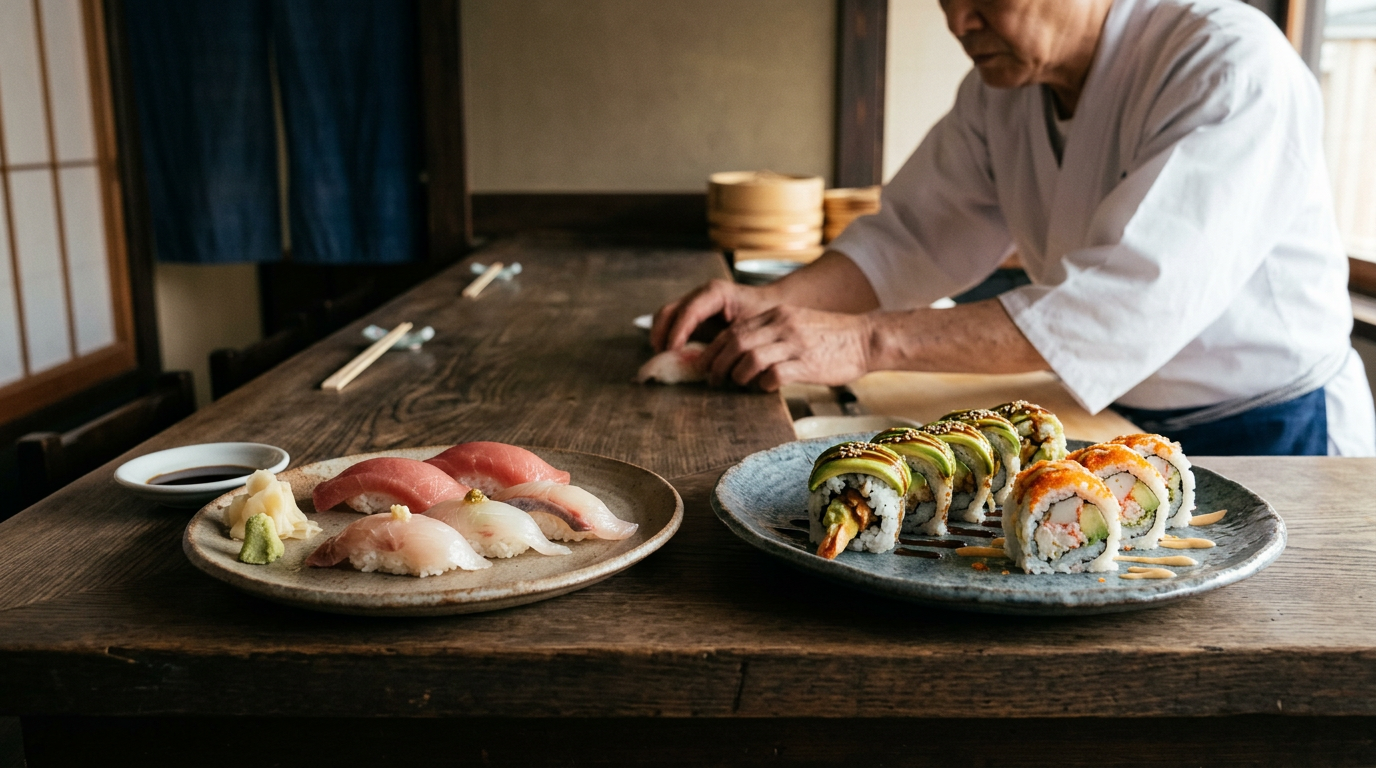
Sushi is one of the most famous Japanese foods in the world. For many diners outside Japan, sushi means large rolls filled with avocado, cream cheese, spicy mayonnaise, tempura shrimp, colorful toppings and rich sauces.
These rolls can be enjoyable. They are often creative, accessible and well adapted to local tastes. But they are not always close to traditional Japanese sushi.
Authentic sushi is usually more restrained. It is built around rice, fish, balance, temperature, texture and technique. The goal is not to make the largest or most dramatic roll. The goal is to create a precise, harmonious bite.
Understanding the difference between authentic sushi and Western-style sushi rolls can help you choose better Japanese restaurants and appreciate sushi more deeply.
Sushi Is Not Only About Raw Fish
A common misunderstanding is that sushi means raw fish. In reality, sushi is defined by seasoned rice. The word sushi refers to rice prepared with vinegar, usually combined with fish, seafood, vegetables, egg or other ingredients.
This is why rice is central to serious sushi. In a traditional sushi restaurant, the rice is not just a base. It is one of the most important elements of the dish.
The fish matters, but the rice often reveals the skill of the chef.
What Makes Sushi Authentic?
Authentic sushi is not defined by luxury or price alone. It is defined by technique, balance and respect for the tradition.
A serious sushi restaurant usually pays close attention to:
- The quality and seasoning of the rice
- The temperature of the rice
- The cut and texture of the fish
- The balance between rice and topping
- The use of wasabi and soy sauce
- Seasonality
- Simplicity and restraint
- The timing of each piece
- The chef’s technique and experience
Traditional sushi is often minimal in appearance, but technically demanding. Each detail matters.
Nigiri: The Heart of Traditional Sushi
Nigiri is one of the clearest expressions of traditional sushi. It usually consists of a small hand-shaped portion of seasoned rice topped with fish or seafood.
A good piece of nigiri should feel balanced. The rice should hold together but not be compressed too tightly. The fish should be cut in a way that improves texture and mouthfeel. The seasoning should support the ingredient, not cover it.
At a serious sushi counter, nigiri is often served piece by piece. The chef controls the order, pacing, temperature and seasoning. This is very different from a large platter of rolls covered in sauces.
Nigiri shows why sushi is a craft.
Maki Exists in Japan, but It Is Usually More Restrained
Maki means rolled sushi. It is also part of Japanese sushi tradition. However, traditional maki is usually simpler and more restrained than many Western-style rolls.
Common traditional maki may include:
- Tuna roll
- Cucumber roll
- Pickled daikon roll
- Negitoro roll
- Kanpyo roll
- Futomaki with several classic ingredients
These rolls are usually not overloaded. They are not designed primarily for visual drama. The balance of rice, seaweed and filling matters.
Western-style rolls often evolved differently. They tend to be larger, richer and more visually expressive.
What Are Western-Style Sushi Rolls?
Western-style sushi rolls are sushi rolls adapted to local tastes outside Japan. They are especially common in North America and many European cities.
They often include ingredients and styles such as:
- Avocado
- Cream cheese
- Spicy mayonnaise
- Tempura shrimp
- Fried fillings
- Sweet sauces
- Large portions
- Multiple toppings
- Inside-out rolls
- Fusion ingredients
- Decorative plating
Popular examples include California rolls, dragon rolls, rainbow rolls, spicy tuna rolls and Philadelphia rolls.
These rolls are not necessarily bad. Some are delicious and skillfully made. But they represent an adapted sushi culture rather than traditional Japanese sushi.
The Role of Sauces and Toppings
One of the biggest differences between authentic sushi and Western-style sushi rolls is the use of sauces and toppings.
Traditional sushi often uses seasoning carefully and sparingly. A chef may brush a piece of nigiri with soy-based sauce, add a small amount of wasabi, or use salt, citrus or another subtle seasoning. The goal is to enhance the fish and rice.
Western-style rolls often use sauces more heavily. Spicy mayonnaise, eel sauce, teriyaki-style sauce, sriracha-based sauces and sweet glazes are common. These can make the roll rich and flavorful, but they can also cover the taste of the rice and fish.
If every piece of sushi is heavily sauced, the focus has shifted from ingredient quality to flavor impact.
Rice Quality Is Often the Hidden Difference
In serious sushi, rice is fundamental. It should be properly cooked, seasoned and served at the right temperature. The rice should have structure, but it should not feel hard, dry, mushy or overly sweet.
In many casual Western-style sushi restaurants, rice is treated mainly as a filler. It may be too cold, too dense, too sweet or too large in proportion to the fish.
This is one of the easiest ways to recognize the difference. Good sushi rice has balance and life. Poor sushi rice makes even good fish feel flat.
Fish Quality Matters, but So Does Preparation
Authentic sushi depends on fish quality, but not only fish quality. The way fish is selected, stored, aged, cut and seasoned is essential.
A sushi chef may adjust the cut depending on the texture of the fish. Some fish may be lightly cured, marinated, aged, seared or brushed with sauce. Others may be served simply.
Western-style sushi often focuses more on recognizable ingredients and combinations. Traditional sushi focuses more on how each ingredient is prepared and how it interacts with the rice.
The difference is subtle, but important.
Authentic Sushi Is Often About Restraint
Traditional Japanese sushi is usually restrained. This does not mean boring. It means focused.
A serious sushi chef avoids unnecessary elements. If the fish is excellent, the chef does not need to hide it under sauce. If the rice is properly seasoned, it does not need excessive sweetness. If the balance is right, the piece feels complete.
Restraint is one of the hardest parts of Japanese cuisine to understand from the outside. It requires confidence. The chef must trust the ingredient and the technique.
Western-style rolls often aim for abundance. Authentic sushi often aims for precision.
Omakase and the Sushi Counter Experience
Omakase means that the chef chooses the meal. At a sushi restaurant, this usually means the chef serves a sequence of pieces based on seasonality, ingredient quality and balance.
This experience is very different from ordering several large rolls from a menu. At the counter, the chef controls pacing, temperature and progression. The meal may move from lighter fish to richer fish, from delicate flavors to stronger ones.
Omakase is not only about luxury. It is about trust and technique. It gives the chef the opportunity to present sushi as a structured experience.
Western-Style Sushi Can Still Be Valuable
It is important to be fair: Western-style sushi is not automatically inferior. It has its own history and appeal.
Western-style rolls helped introduce many people to sushi. They made Japanese food more accessible in markets where raw fish or traditional sushi might initially have felt unfamiliar. Some chefs use roll formats creatively and with real skill.
The issue is not whether Western-style sushi is good or bad. The issue is whether diners understand what they are eating.
A California roll and traditional nigiri are both part of the global sushi story, but they represent different ideas of sushi.
How to Recognize a More Traditional Sushi Restaurant
When evaluating a sushi restaurant, look for signs such as:
- A strong focus on nigiri or traditional sushi
- Clear attention to rice quality
- A chef with serious sushi training
- Seasonal fish or specials
- A restrained use of sauces
- Smaller, balanced pieces
- A focused menu
- Counter seating
- Omakase or chef-selected options
- Staff who can explain the fish and preparation
No single signal proves authenticity. But together, these details can help you understand whether a restaurant is rooted in traditional sushi culture.
When a Sushi Menu May Be More Western-Style
A sushi restaurant may be more Western-style if the menu strongly emphasizes:
- Large specialty rolls
- Heavy sauces
- Cream cheese
- Fried fillings
- Sweet glazes
- Many fusion ingredients
- Very large portions
- Decorative toppings
- Broad non-Japanese menu items
Again, this does not mean the restaurant is bad. It simply means the concept may be more adapted to local tastes than traditional Japanese sushi.
Why This Matters for Washoku Guide
At Washoku Guide, we are interested in Japanese restaurants that are meaningfully connected to Japanese food culture. For sushi, that means looking beyond whether a restaurant serves rolls.
Important questions include:
- Who owns or operates the restaurant?
- Who leads the sushi counter?
- Is the chef trained in Japanese sushi technique?
- How is the rice prepared?
- Is the menu focused or overloaded?
- Are sauces and toppings used with restraint?
- Does the restaurant respect the structure of traditional sushi?
These questions help separate Japanese-inspired sushi concepts from restaurants that are more deeply rooted in Japanese culinary tradition.
Final Thought
The difference between authentic sushi and Western-style sushi rolls is not simply a matter of tradition versus creativity. It is a difference in philosophy.
Western-style rolls often focus on abundance, accessibility and bold combinations. Authentic Japanese sushi focuses on rice, fish, balance, seasonality, restraint and technique.
Both can be enjoyable. But if you want to understand sushi as part of Japanese food culture, it helps to look beyond the roll and pay attention to the craft behind each bite.
Restaurants featured in this guide
Madrid
Miyama Castellana
Miyama Castellana is the flagship of Madrid's most respected Japanese restaurant group, overseen by Osaka-born owner Hiroo Miki. The kitchen is led by Tokyo-trained chefs serving traditional sushi, sashimi and seasonal Japanese cuisine in an elegant setting.
Sydney
Besuto
Besuto is a sleek underground omakase at the Salesforce Tower precinct in Sydney's CBD, where Kyoto-trained chef Michiaki Miyazaki — formerly of three-Michelin-star Kikunoi Honten — delivers a 15-course kaiseki-influenced progression for AUD 280 per person. The adjoining Bar Besuto offers Sydney's finest Japanese whisky list for post-dinner exploration.
Madrid
Miyama Flor Baja
Miyama Flor Baja is a beloved Madrid institution serving traditional Japanese sushi and cooked dishes, led by Yokohama-born chef Takimura-San. Part of the Japanese-owned Miyama group, it has anchored Madrid's authentic Japanese scene for over twenty years.
Dubai
Bentoya Kitchen
Founded in 1997 by Japanese chef and Goodwill Ambassador Shinji Taniuchi, Bentoya Kitchen is Dubai's longest-standing Japanese casual dining institution, serving authentic ramen, sushi, bento boxes, and donburi across multiple city branches.
Sydney
Choji Omakase
Choji Omakase is an intimate upstairs counter in Chatswood where Japanese executive chef Takashi Yamamoto — a self-described 'meat-otaku' with over two decades of yakiniku and kaiseki training in Japan — guides diners through a wagyu-focused omakase that integrates the discipline of Japanese kaiseki with the theatrics of premium cattle. Reservations are released on the 15th of each month.
Madrid
Ageyoka Sabor de Osaka
Ageyoka Sabor de Osaka is Madrid's only specialist Osaka kushikatsu restaurant, run by Japanese owners from Osaka inside the vibrant Mercado Barceló. The menu centres on panko-crusted deep-fried skewers in the classic Osaka style, alongside tonkatsu, katsu sando and assorted Japanese soul food.
Delhi
Adrift Kaya
Adrift Kaya is Delhi's TripAdvisor #1 Japanese restaurant, helmed by Michelin-starred Chef David Myers whose benchmark dining experience is Sushisho Saito in Tokyo — JFOODO/JETRO certified, presenting omakase, toro sashimi and robata in a Tokyo laneway-inspired izakaya.
Continue reading
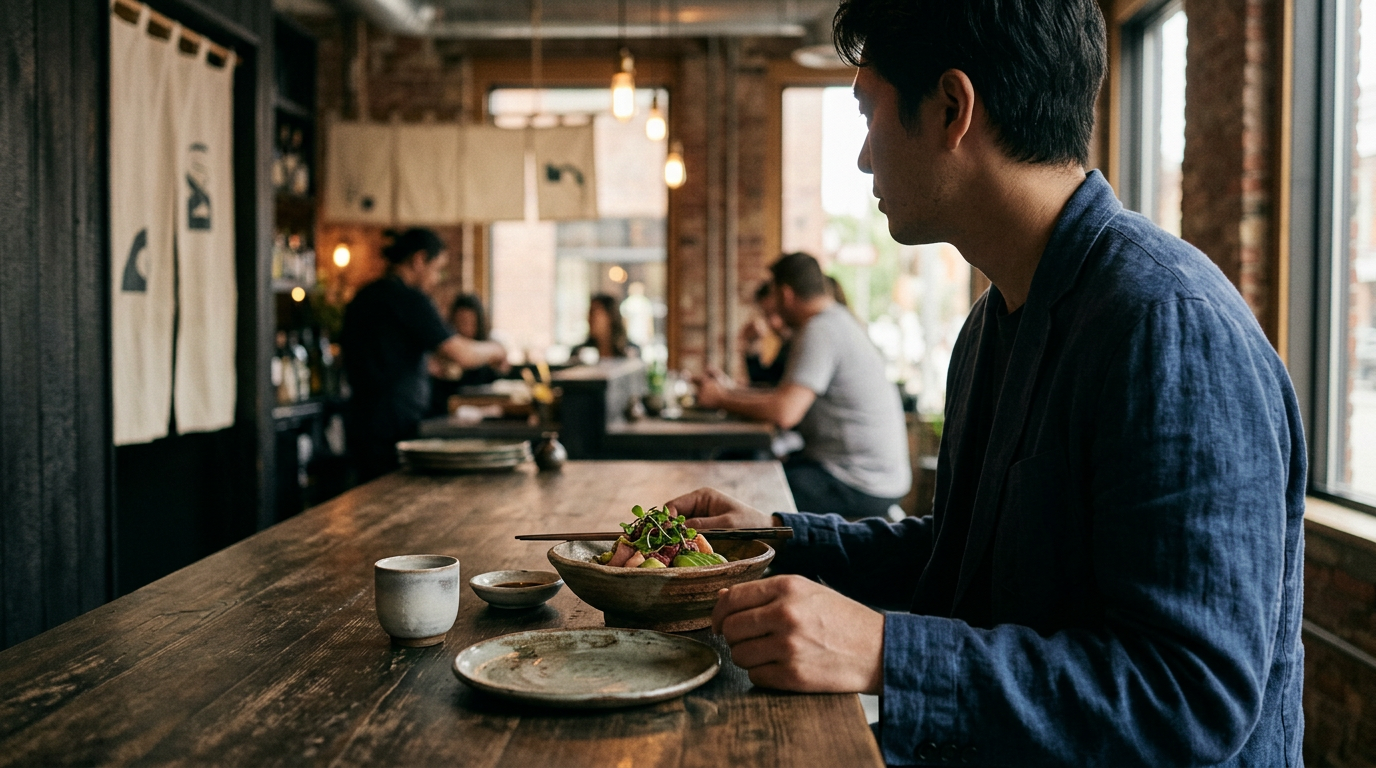
How Japanese Restaurants Abroad Adapt to Local Taste — and When It Becomes Fusion
Japanese restaurants abroad often balance authenticity with local expectations. Some changes are practical, such as using local ingredients or adjusting portion sizes. Others transform the cuisine into fusion. This guide explains where thoughtful adaptation ends and where Japanese-inspired fusion begins.
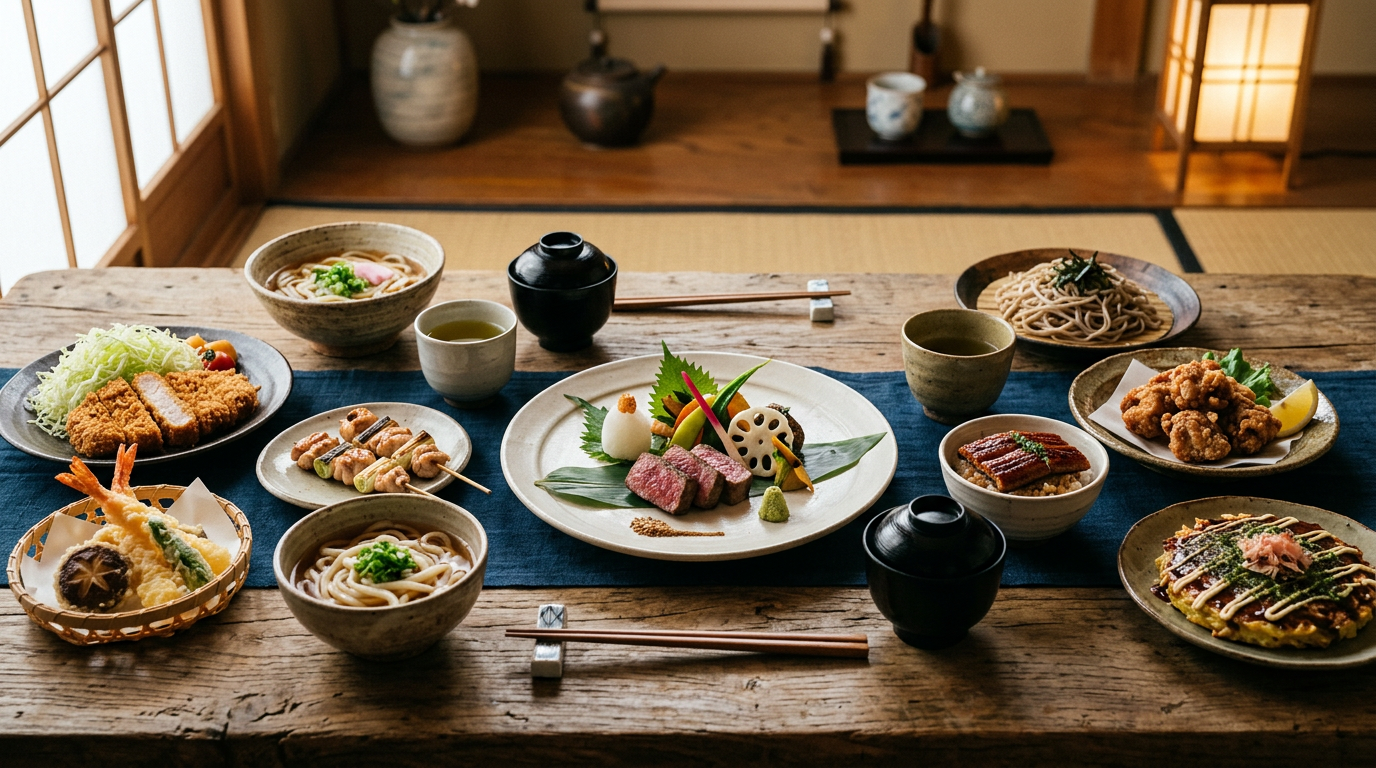
Beyond Sushi and Ramen: 10 Japanese Dishes You Should Know Before Choosing a Restaurant
Sushi and ramen may be the most famous Japanese foods abroad, but they represent only a small part of Japanese cuisine. From teishoku and tonkatsu to yakitori, soba, tempura and donburi, this guide introduces ten essential Japanese dishes and dining formats that can help you choose a better, more authentic Japanese restaurant.
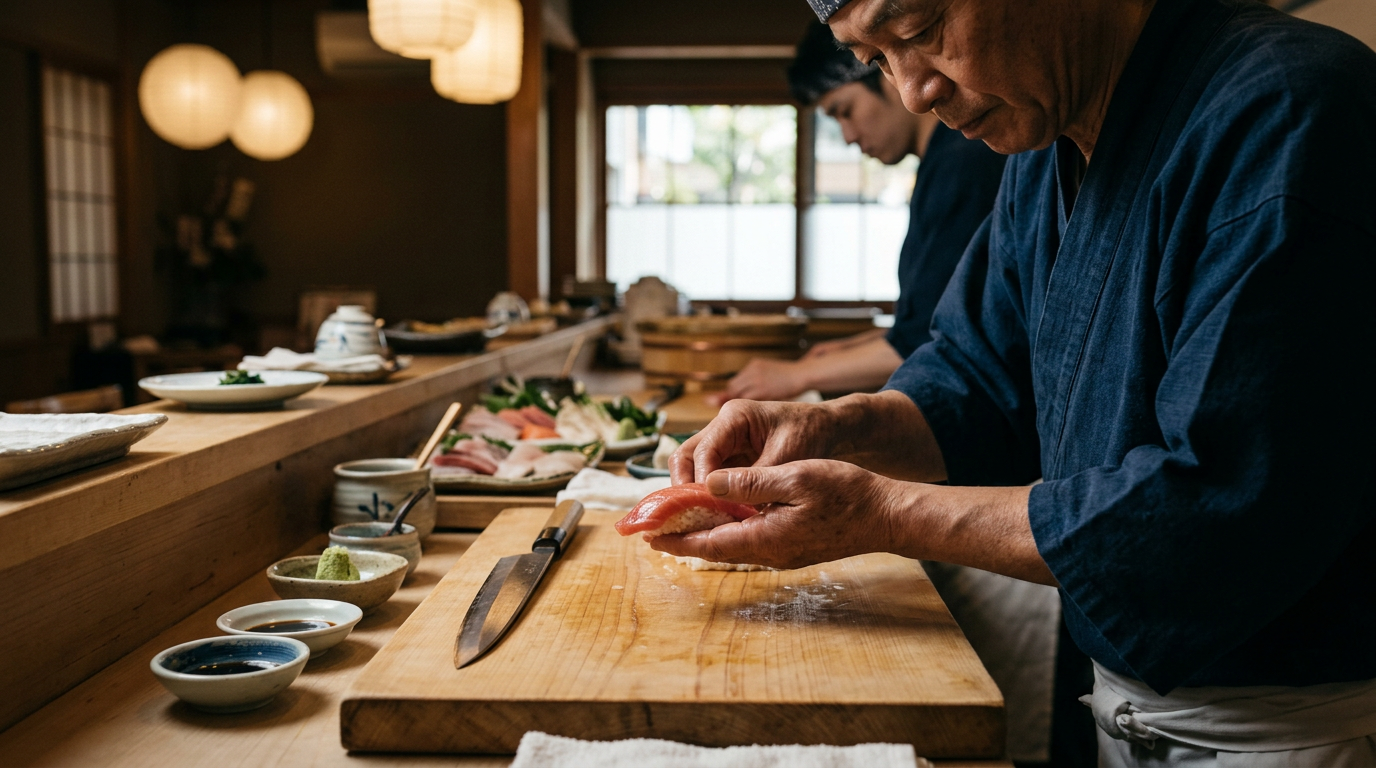
The Role of the Japanese Chef: Why Technique Matters in Authentic Japanese Cuisine
A Japanese chef often brings more than cooking skill to a restaurant. In authentic Japanese cuisine, technique, discipline, seasonality, knife work, rice preparation, dashi, balance and restraint all matter. This article explains why the chef’s background is one of the strongest signals of a truly authentic Japanese restaurant abroad.