Cuisine & Culture
How Japanese Restaurants Abroad Adapt to Local Taste — and When It Becomes Fusion
Japanese restaurants outside Japan often adapt to local preferences. Some adaptations are natural and thoughtful. Others move the restaurant away from authentic Japanese food culture.
June 5, 2026 · 8 min read
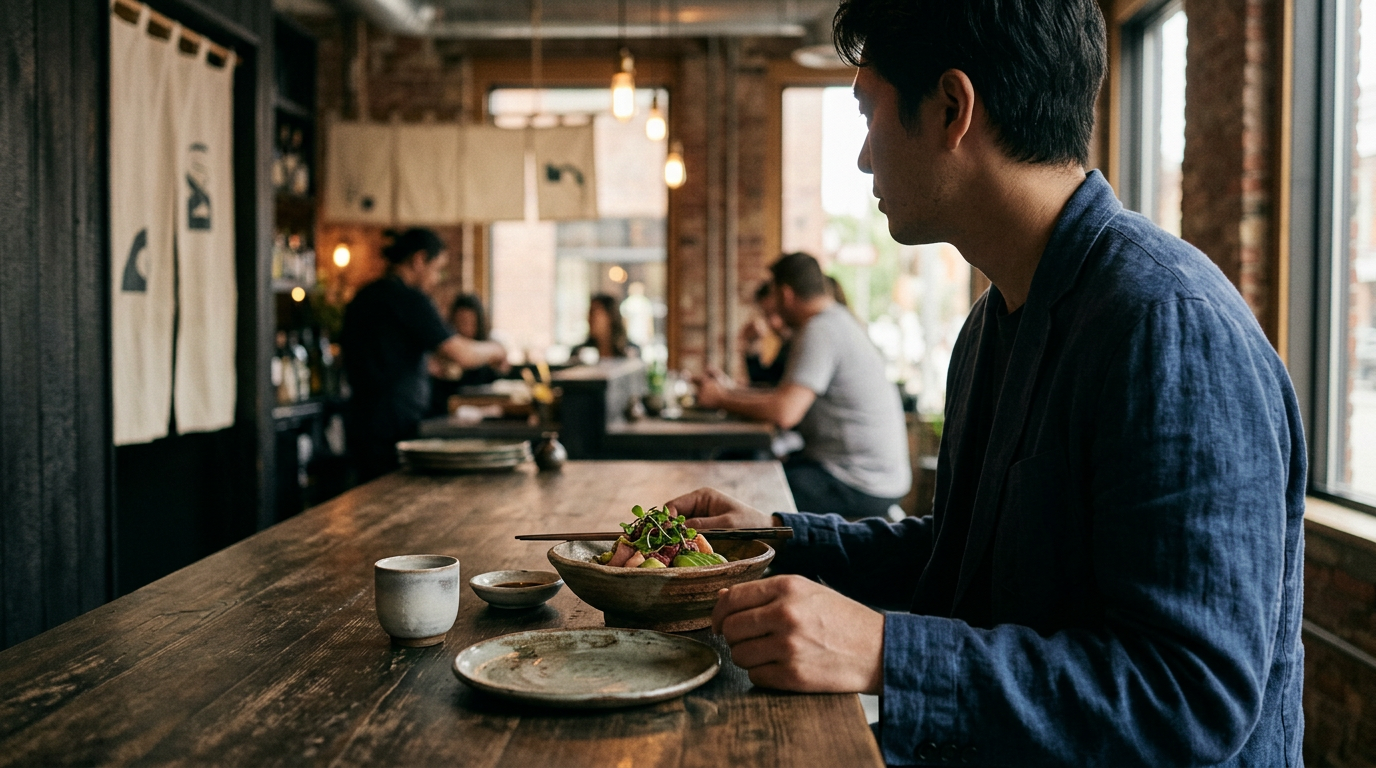
How Japanese Restaurants Abroad Adapt to Local Taste — and When It Becomes Fusion
Japanese cuisine has become global. In almost every major city, diners can find sushi, ramen, izakaya food, tempura, yakitori or Japanese curry. But Japanese restaurants outside Japan rarely exist in a perfect cultural vacuum. They operate in local markets, serve local customers and respond to local expectations.
This means adaptation is almost inevitable.
A Japanese restaurant abroad may adjust portion sizes, use local fish, simplify a menu, add vegetarian options, change spice levels or explain dishes more clearly for first-time diners. These changes can be thoughtful and necessary.
But there is also a point where adaptation becomes something else: fusion. Fusion is not automatically bad. Some fusion restaurants are creative and excellent. But fusion is different from traditional Japanese cuisine, and diners should understand the distinction.
Adaptation Is Not the Enemy of Authenticity
Authenticity does not mean copying Japan perfectly in another country. That is often impossible.
Ingredients, customer expectations, regulations, supply chains, labor markets and pricing structures differ from country to country. A Japanese restaurant in London, New York, Toronto, Paris or Sydney will naturally face different conditions than a restaurant in Tokyo, Kyoto or Osaka.
A thoughtful restaurant may adapt while still preserving the core logic of Japanese cuisine.
For example:
- A sushi restaurant may use local seasonal fish.
- A ramen shop may adjust broth richness slightly for local taste.
- An izakaya may explain unfamiliar dishes more clearly on the menu.
- A teishoku restaurant may offer more vegetarian options.
- A soba restaurant may source buckwheat locally.
- A kaiseki restaurant may use regional produce while applying Japanese technique.
These adaptations do not necessarily make the restaurant less authentic. In many cases, they show intelligence and respect for both Japanese tradition and the local environment.
The Core Question: What Is Being Preserved?
The key issue is not whether a restaurant adapts. The key issue is what it preserves.
A restaurant can adapt ingredients while preserving Japanese technique. It can adjust presentation while preserving balance. It can serve local customers while keeping a focused Japanese concept.
The important questions are:
- Is the restaurant still grounded in Japanese culinary technique?
- Does it respect the original structure of the dish?
- Are flavors balanced rather than overloaded?
- Is the menu coherent?
- Does the restaurant understand the tradition it is adapting?
- Is the adaptation thoughtful, or mainly commercial?
A Japanese restaurant abroad does not need to be identical to a restaurant in Japan. But it should still understand what makes the cuisine Japanese.
Why Japanese Restaurants Abroad Adapt
Restaurants adapt for several reasons.
First, ingredients may be difficult to source. Certain fish, vegetables, condiments or noodles may not be available at the same quality or price outside Japan.
Second, local diners may have different expectations. In some markets, customers expect larger portions, stronger flavors, more sauces or more menu variety.
Third, restaurants must survive commercially. A highly traditional concept may be admired by a small audience but may struggle if the local market is not ready for it.
Fourth, some dishes require explanation. A restaurant may need to make Japanese food more accessible without losing its identity.
These are real business constraints. A restaurant can be authentic and still make practical choices.
Good Adaptation: Local Ingredients, Japanese Logic
One of the best forms of adaptation is using local ingredients through a Japanese culinary lens.
Japanese cuisine has always valued seasonality and regionality. In that sense, using local ingredients abroad can be consistent with Japanese food culture, provided the technique and structure remain Japanese.
A chef may use local fish for sushi, local vegetables in tempura, local mushrooms in a seasonal dish, or regional meat in a Japanese-style preparation.
This can be highly authentic if the chef applies Japanese principles: balance, restraint, seasonality, texture and respect for the ingredient.
Authenticity is not only about importing ingredients from Japan. It is also about knowing how to treat ingredients in a Japanese way.
Good Adaptation: Clear Explanation for Local Diners
Another useful form of adaptation is communication.
Many diners outside Japan may not know the difference between izakaya, teishoku, omakase, kaiseki, soba, udon, yakitori or donburi. A good restaurant may explain these concepts more clearly than it would need to in Japan.
This does not reduce authenticity. It can actually deepen the guest experience.
A menu that explains Japanese terms, ingredients and dining formats can help diners appreciate the food more accurately. The restaurant remains Japanese in substance while becoming more accessible in presentation.
Good Adaptation: Dietary Options Without Losing the Concept
Restaurants abroad may also adapt to local dietary preferences. Vegetarian, vegan, gluten-free or allergy-sensitive options may be more expected in some markets than in Japan.
This can be done well or poorly.
A thoughtful restaurant may create vegetarian dishes that still feel Japanese, using ingredients such as tofu, mushrooms, seaweed, rice, miso, seasonal vegetables and carefully prepared broth alternatives.
A less thoughtful restaurant may simply add generic plant-based items that do not fit the concept.
The difference is whether the adaptation is integrated into the restaurant’s Japanese identity.
When Adaptation Starts Becoming Fusion
Adaptation becomes fusion when the restaurant moves away from Japanese culinary structure and begins combining cuisines more freely.
This may include:
- Heavy use of non-Japanese sauces
- Large sushi rolls with many toppings
- Cream cheese, spicy mayonnaise or sweet glazes as dominant flavors
- Mixing unrelated Asian cuisines on one menu
- Japanese dishes redesigned mainly for visual impact
- Excessive use of fried fillings and toppings
- Strong flavor combinations that cover the base ingredient
- A menu built around novelty rather than technique
Fusion is not automatically negative. But it is different from authentic Japanese cuisine.
A fusion restaurant may be creative, fun and commercially successful. It may even be excellent. But it should not be confused with a restaurant deeply rooted in traditional Japanese food culture.
The Problem with “Everything Japanese” Menus
One common sign of weak authenticity is a menu that tries to offer everything.
A restaurant may serve sushi, ramen, teriyaki, tempura, poke bowls, Korean fried chicken, Thai curry, bao buns and bubble tea all on the same menu. This kind of menu may appeal to broad customer demand, but it usually lacks a clear Japanese identity.
In Japan, many restaurants specialize. A ramen-ya focuses on ramen. A sushi-ya focuses on sushi. A soba restaurant focuses on soba. A yakitori restaurant focuses on grilled skewers.
Specialization does not guarantee authenticity, but it is often a good signal. A focused restaurant is more likely to understand its craft.
Sushi: The Most Visible Example
Sushi shows the difference between adaptation and fusion very clearly.
A sushi restaurant abroad may adapt by using local fish, explaining omakase more clearly, or adjusting the sequence of a tasting menu for local diners. These changes can still preserve traditional sushi logic.
But when sushi becomes mainly large rolls filled with cream cheese, fried shrimp, spicy mayonnaise, sweet sauces and multiple toppings, it has moved toward Western-style sushi.
That does not make it bad. But it changes the nature of the experience.
Traditional sushi focuses on rice, fish, balance, temperature and technique. Western-style rolls often focus on abundance, richness and visual appeal.
Both can exist, but they should not be treated as the same thing.
Ramen: Adaptation Without Losing the Bowl
Ramen also adapts easily abroad. A ramen shop may adjust salt levels, offer vegetarian broth, use local pork or chicken, or create seasonal specials. These can be reasonable adaptations.
But a ramen shop becomes less traditional when the bowl is mainly designed for spectacle: too many toppings, excessive richness, unclear broth style or flavor combinations that overwhelm the noodles and soup.
A serious ramen shop usually understands broth, tare, noodles, aroma oil and toppings as a balanced system. Adaptation should support that system, not bury it.
Izakaya: Flexible but Still Japanese
Izakaya are naturally flexible. They are casual places for drinks and shared plates, so they can accommodate a wide range of dishes.
This makes izakaya one of the easier Japanese restaurant types to adapt abroad. Local ingredients, seasonal specials and creative small plates can fit well.
But even an izakaya needs coherence. If the menu becomes a random mix of Asian fusion dishes, it may lose its Japanese identity.
A strong izakaya abroad should still feel connected to Japanese drinking and dining culture: shared plates, grilled items, fried dishes, sashimi, pickles, seasonal snacks, sake, shochu, beer and a relaxed social atmosphere.
Fusion Can Be Honest and Valuable
Fusion should not be dismissed. Some of the world’s most interesting restaurants combine Japanese technique with other culinary traditions in thoughtful ways.
The issue is transparency.
A Japanese-fusion restaurant should be understood as fusion. A Japanese-inspired restaurant should be understood as Japanese-inspired. A traditional Japanese restaurant should be understood as traditional.
Problems arise when restaurants use the language and imagery of authenticity while mainly serving food adapted beyond recognition.
For diners, clear categories matter. They help people choose the experience they actually want.
How to Tell Whether Adaptation Is Thoughtful
When evaluating a Japanese restaurant abroad, ask:
- Does the restaurant have a clear concept?
- Are adaptations explained or intentional?
- Does the chef understand Japanese technique?
- Are local ingredients used in a Japanese way?
- Are sauces and toppings used with restraint?
- Is the menu focused or overloaded?
- Do traditional dishes still respect their original structure?
- Does the food feel balanced rather than excessive?
- Is the restaurant transparent about being traditional, modern or fusion?
These questions help separate serious adaptation from generic fusion.
Why This Matters for Washoku Guide
Washoku Guide focuses on restaurants that are meaningfully connected to Japanese food culture. That does not mean every restaurant must be rigidly traditional. Japanese cuisine itself is dynamic and adaptable.
But authenticity requires a foundation.
A restaurant can be modern and authentic. It can use local ingredients and remain Japanese. It can adapt to local diners without becoming generic.
The key is whether the restaurant preserves the principles of Japanese cuisine: technique, balance, seasonality, restraint, specialization and respect for the dish.
Final Thought
Japanese restaurants abroad will always adapt. That is natural, and often necessary. The best restaurants adapt intelligently: they use local ingredients, communicate clearly and serve local guests while preserving the core logic of Japanese cuisine.
Fusion begins when that core logic is replaced by novelty, excess or broad market appeal.
Both traditional Japanese restaurants and fusion restaurants can be enjoyable. But they are not the same. Understanding the difference helps diners make better choices — and helps authentic Japanese food culture receive the recognition it deserves.
Restaurants featured in this guide
Paris
Baillotte
Chef Satoshi Amitsu — honed at Georges Blanc (3★) and Auberge des Templiers (1★) — applies Japanese precision and binchotan grill mastery to a French bistronomic menu in this warmly designed Saint-Germain restaurant.
Paris
Akabeko (赤べこ)
Veteran Japanese chef Yasuo Nanaumi opened Akabeko in March 2023 — his first wholly-owned restaurant after a 50-year career in France's greatest kitchens — delivering surprise omakase menus that weave Japanese culture through French gastronomy.
Düsseldorf
1oder8
Run by Japanese chef and owner Koki Takahashi, 1oder8 is Düsseldorf's first standing izakaya bar, offering a genuinely immersive slice of Japan in Little Tokyo. The open kitchen, standing counter, and attentive service create an atmosphere that feels transplanted directly from a Tokyo side street.
New York
Aokō Matcha
West Village's sleek matcha café serving five shades of ceremonial-grade gelato, hojicha parfaits, and matcha frappes — inspired by Japanese specialty shops.
Toronto
Aburi Hana
Yorkville kaiseki room from the Aburi group — currently closed for renovation.
Shanghai
Azabuya 麻布屋 (Pudong Kerry Town)
Azabuya (麻布屋, 'Azabu House') is a Japanese-founded casual dining brand named after Tokyo's upscale Azabu neighborhood, with seven locations across China. The Pudong Kerry Town branch serves Japanese rice bowls, noodles, and the brand's celebrated matcha-forward desserts in a clean, contemporary space.
Continue reading
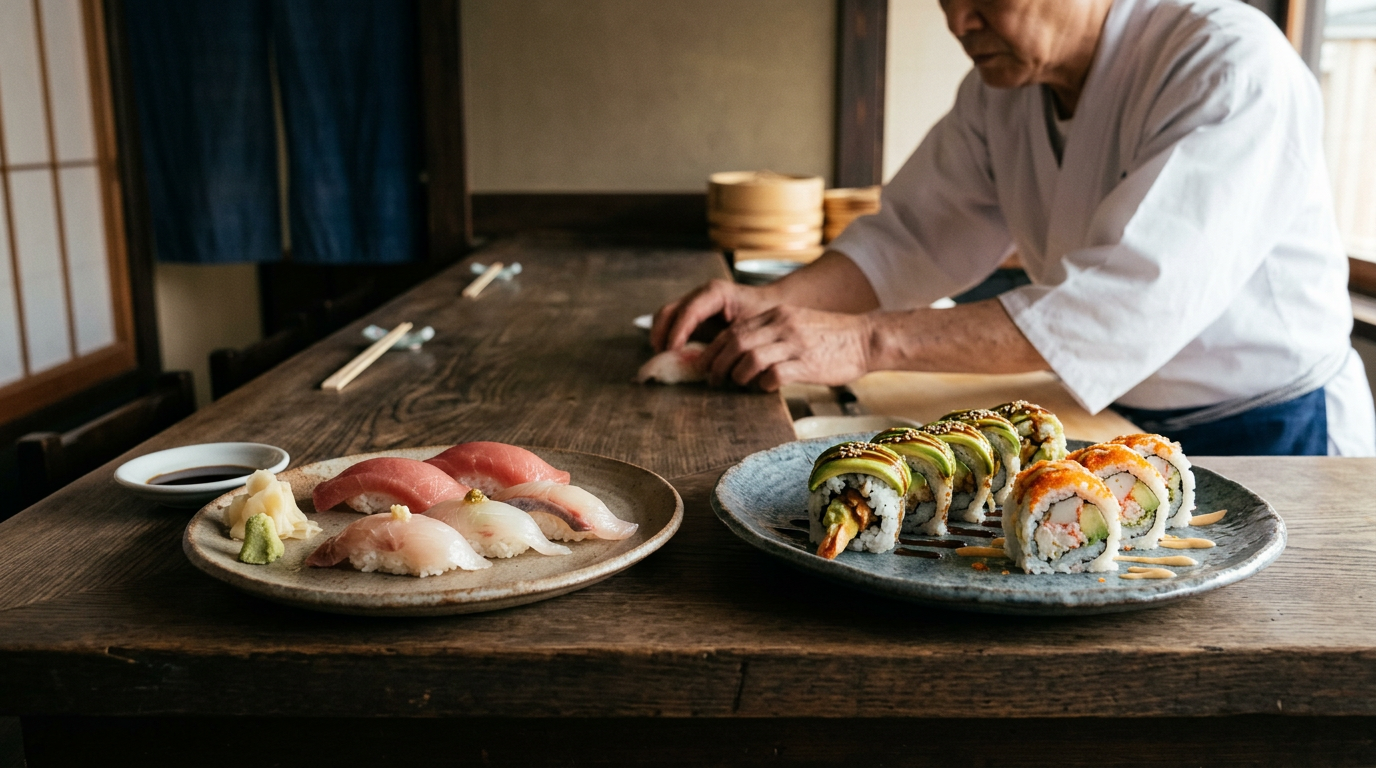
The Difference Between Authentic Sushi and Western-Style Sushi Rolls
Authentic Japanese sushi is built on rice, fish, balance, seasonality and precise technique. Western-style sushi rolls often focus more on size, sauces, toppings and visual impact. This guide explains the key differences and helps you understand what to look for when choosing a serious sushi restaurant.
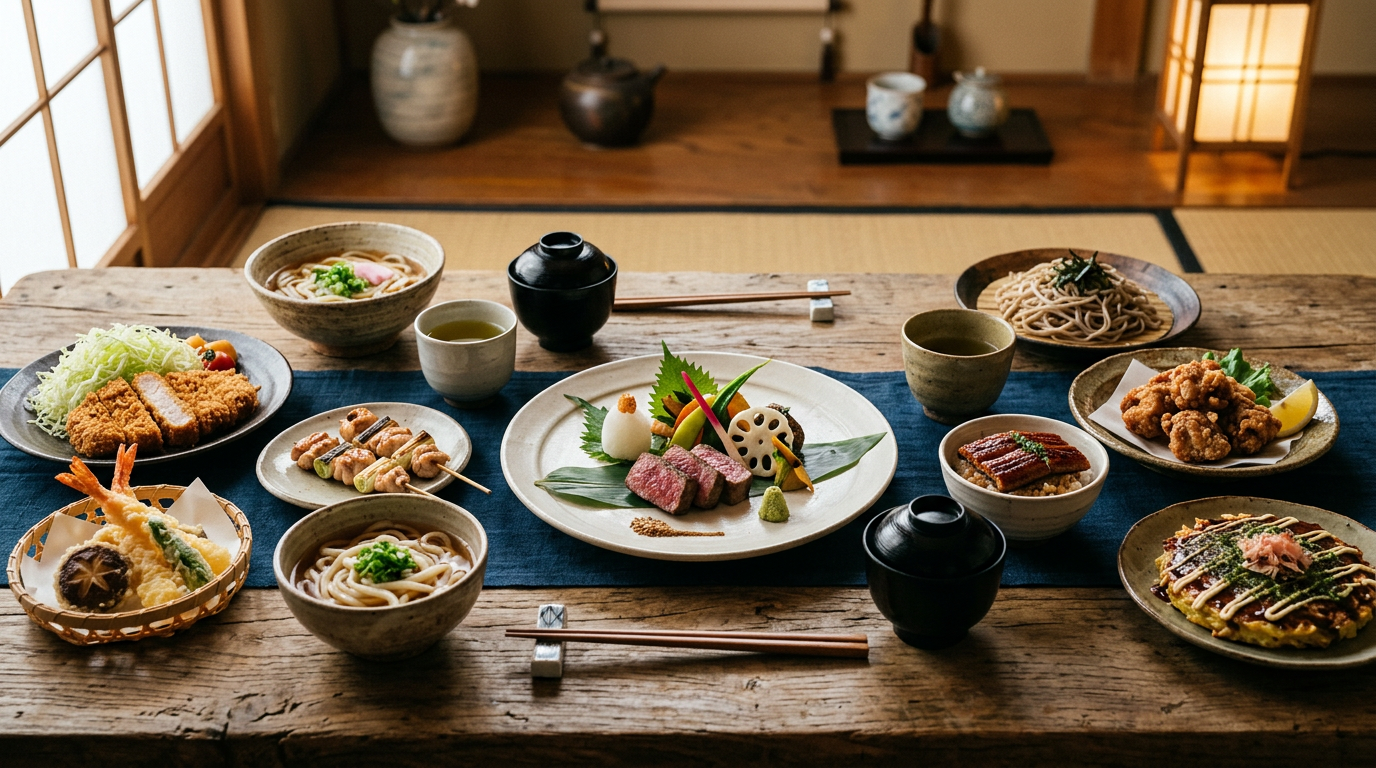
Beyond Sushi and Ramen: 10 Japanese Dishes You Should Know Before Choosing a Restaurant
Sushi and ramen may be the most famous Japanese foods abroad, but they represent only a small part of Japanese cuisine. From teishoku and tonkatsu to yakitori, soba, tempura and donburi, this guide introduces ten essential Japanese dishes and dining formats that can help you choose a better, more authentic Japanese restaurant.
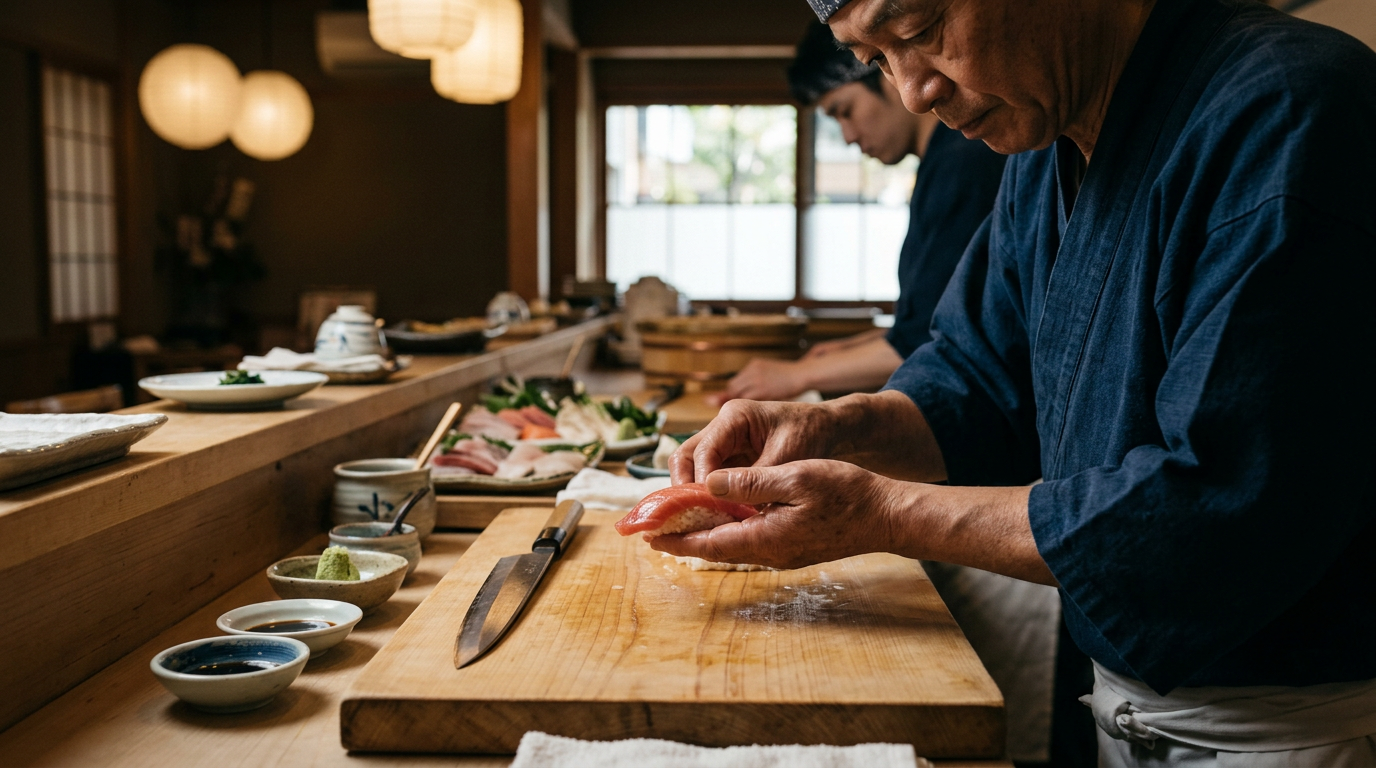
The Role of the Japanese Chef: Why Technique Matters in Authentic Japanese Cuisine
A Japanese chef often brings more than cooking skill to a restaurant. In authentic Japanese cuisine, technique, discipline, seasonality, knife work, rice preparation, dashi, balance and restraint all matter. This article explains why the chef’s background is one of the strongest signals of a truly authentic Japanese restaurant abroad.