Cuisine & Culture
Beyond Sushi and Ramen: 10 Japanese Dishes You Should Know Before Choosing a Restaurant
Japanese cuisine is much broader than sushi and ramen. This guide introduces ten essential dishes that help you understand authentic Japanese restaurant culture.
May 28, 2026 · 6 min read
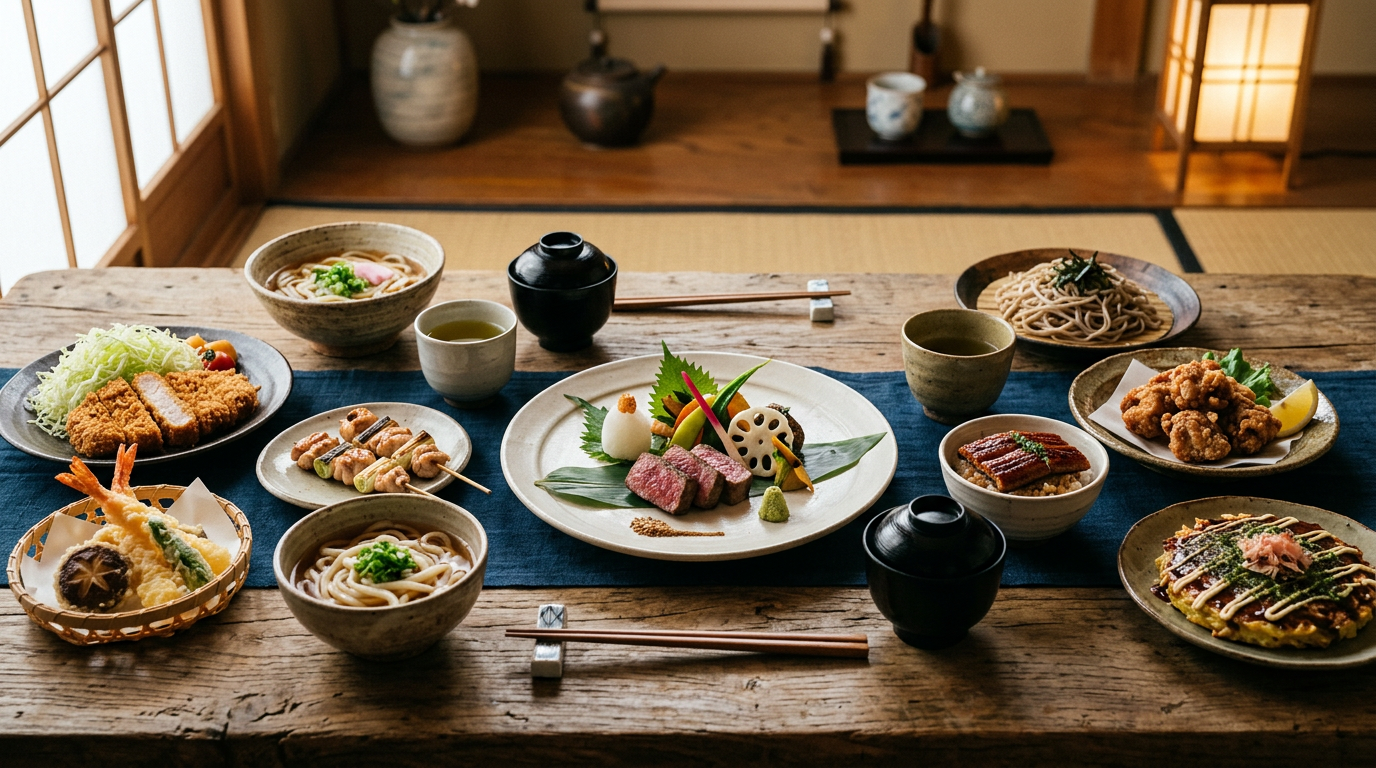
Beyond Sushi and Ramen: 10 Japanese Dishes You Should Know Before Choosing a Restaurant
For many diners outside Japan, Japanese food usually means sushi or ramen. Both are important parts of Japanese cuisine, and both can be excellent when prepared seriously. But they are only a small part of Japan’s food culture.
Japanese cuisine is much broader. It includes casual drinking food, everyday set meals, grilled skewers, seasonal multi-course dining, noodle traditions, rice bowls, fried dishes, simmered dishes and home-style cooking.
Understanding these dishes helps you choose better Japanese restaurants. It also helps you recognize whether a restaurant is truly rooted in Japanese food culture or simply using a few familiar Japanese dishes as branding.
Here are ten Japanese dishes and dining styles worth knowing.
1. Teishoku: The Japanese Set Meal
Teishoku is one of the best ways to understand everyday Japanese food. It usually means a complete set meal built around rice, miso soup, pickles, a main dish and one or more small side dishes.
Common teishoku mains include grilled fish, tonkatsu, karaage, ginger pork, tempura or saba. The structure is balanced and practical: rice, soup, protein, vegetables and pickles served together.
Teishoku is not flashy, but it reflects the logic of Japanese home-style eating. If you want to experience Japanese food beyond sushi and ramen, teishoku is one of the best places to start.
2. Tonkatsu: Japanese Breaded Pork Cutlet
Tonkatsu is a breaded and deep-fried pork cutlet, usually served with shredded cabbage, rice, miso soup and a thick, slightly sweet tonkatsu sauce.
At first glance, tonkatsu may look simple. But a good tonkatsu restaurant pays close attention to the quality of the pork, the texture of the coating, the frying temperature and the balance between crispness and juiciness.
Tonkatsu is a good example of Japanese comfort food that is both casual and highly technical. A serious tonkatsu restaurant may have a narrow menu and focus almost entirely on perfecting this one dish.
3. Yakitori: Grilled Chicken Skewers
Yakitori means grilled chicken skewers, but the category is broader and more refined than many people expect. A yakitori restaurant may serve different parts of the chicken, including thigh, breast, skin, liver, heart, cartilage and meatballs.
The skill lies in butchery, skewering, charcoal grilling and seasoning. Some skewers are seasoned simply with salt. Others are brushed with tare, a savory-sweet sauce.
Yakitori is often served in a casual setting, sometimes with beer, sake or shochu. But the best yakitori chefs treat grilling as a serious craft.
4. Tempura: Light, Precise Frying
Tempura is one of Japan’s most famous dishes, but it is often misunderstood abroad. Good tempura should not be heavy, oily or overly thick. It should be light, crisp and delicate.
Tempura can include shrimp, fish, mushrooms, seasonal vegetables and other ingredients. The chef must control batter, oil temperature and timing with great precision.
At a serious tempura restaurant, the dish is often served piece by piece, immediately after frying. This keeps the texture at its best and shows how technical Japanese frying can be.
5. Soba: Buckwheat Noodles
Soba are Japanese buckwheat noodles. They can be served cold with dipping sauce or hot in broth. Cold soba, especially zaru soba, is one of the best ways to appreciate the flavor and texture of the noodles themselves.
Soba restaurants often have a calm, traditional atmosphere. A serious soba restaurant may make its noodles in-house and focus heavily on texture, aroma and dipping sauce.
Soba is a good example of Japanese cuisine’s restraint. The dish may look simple, but its quality depends on very precise execution.
6. Udon: Thick Wheat Noodles
Udon are thick wheat noodles, usually softer and chewier than soba. They can be served in a hot broth, cold with dipping sauce, or in regional styles with various toppings.
Common udon toppings include tempura, green onion, egg, beef, tofu skin and grated daikon. Like ramen, udon is a noodle dish, but the overall feeling is different. Udon is often cleaner, softer and more comforting.
A good udon restaurant focuses on noodle texture, broth clarity and balance.
7. Donburi: Japanese Rice Bowls
Donburi means a rice bowl topped with meat, fish, vegetables or egg. It is one of the most common forms of casual Japanese dining.
Popular types include:
- Gyudon: beef over rice
- Katsudon: pork cutlet with egg over rice
- Oyakodon: chicken and egg over rice
- Tendon: tempura over rice
- Unadon: grilled eel over rice
Donburi is practical, satisfying and deeply connected to everyday Japanese food culture. It is usually casual, but a well-made donburi depends on good rice, balanced sauce and proper topping preparation.
8. Karaage: Japanese Fried Chicken
Karaage is Japanese-style fried chicken, usually marinated before frying. It is often served in izakaya, bento boxes, teishoku meals and casual restaurants.
Good karaage should be crisp on the outside and juicy inside. The marinade often includes soy sauce, ginger, garlic or sake, but the flavor should not overpower the chicken.
Karaage is a useful dish for understanding casual Japanese cooking. It is familiar and accessible, but when made well, it shows careful seasoning and frying technique.
9. Okonomiyaki: Japanese Savory Pancake
Okonomiyaki is a savory Japanese pancake, especially associated with Osaka and Hiroshima. It usually contains cabbage, batter and various ingredients such as pork, seafood or noodles, depending on the regional style.
It is often topped with okonomiyaki sauce, mayonnaise, bonito flakes and seaweed powder.
Okonomiyaki is social, informal and satisfying. Some restaurants cook it for you, while others allow guests to cook it at the table. It represents a more relaxed and playful side of Japanese dining.
10. Kaiseki: Seasonal Multi-Course Dining
Kaiseki is one of the most refined forms of Japanese cuisine. It is usually served as a multi-course meal and emphasizes seasonality, presentation, balance, ingredients and atmosphere.
A kaiseki meal is carefully structured. Each course has a role, and the menu often reflects the season through ingredients, colors, tableware and plating.
Kaiseki is very different from casual Japanese dining. It is usually formal, slower and more expensive. But it is essential for understanding the most refined side of washoku.
Why These Dishes Matter
These dishes show how diverse Japanese cuisine really is. Some are casual and everyday. Others are refined and ceremonial. Some focus on noodles, others on rice, grilling, frying or seasonal presentation.
Together, they show that Japanese food is not one single category. It is a collection of highly developed dining traditions.
When a restaurant abroad offers only sushi rolls and ramen, it may still be enjoyable. But it does not necessarily represent the full depth of Japanese cuisine.
How This Helps You Choose a Better Japanese Restaurant
Knowing these dishes helps you read Japanese restaurant menus more intelligently.
A restaurant that specializes in one category, such as soba, yakitori, tempura, tonkatsu or teishoku, may be more serious than a restaurant trying to serve everything at once. A focused menu often suggests that the kitchen understands the tradition behind the food.
Look for restaurants that show clarity. A good Japanese restaurant usually knows what kind of restaurant it is.
Ask yourself:
- Does the menu have a clear focus?
- Are traditional dishes treated with respect?
- Does the restaurant avoid unnecessary fusion elements?
- Are rice, broth, noodles or frying technique handled carefully?
- Does the food feel balanced rather than overloaded?
- Is there a connection to Japanese culinary culture?
These questions can help you find more authentic Japanese dining experiences.
Final Thought
Sushi and ramen are important, but they are only the beginning. To understand Japanese cuisine more deeply, it helps to explore teishoku, tonkatsu, yakitori, tempura, soba, udon, donburi, karaage, okonomiyaki and kaiseki.
Each dish opens a different window into Japanese food culture.
The next time you choose a Japanese restaurant, do not only ask whether it serves sushi or ramen. Ask what part of Japanese cuisine it truly represents.
Restaurants featured in this guide
New York
Fifteen East
A well-regarded sushi counter at Union Square serving traditional Japanese omakase and à la carte in a clean, professional room.
Los Angeles
Bluefin Japanese Restaurant by Abe
Chef Takashi Abe's innovative Japanese sushi restaurant at Crystal Cove Promenade in Newport Coast — the mentor who trained Hana Re's Michelin-starred chef Atsushi Yokoyama.
Düsseldorf
Adjito
Adjito channels the culinary philosophy of star chef Yoshizumi Nagaya, combining the purism of traditional Japanese cooking with techniques and ingredients from modern European haute cuisine. Sushi, sashimi, and tempura are elevated by innovative preparations and European accompaniments in the relaxed Lorettoviertel neighbourhood.
Shanghai
Butanchu Ramen 京都一乘寺拉面豚人
Butanchu (豚人) is a Kyoto-inspired ramen cult favourite in Putuo, producing some of Shanghai's most intensely porky Hakata-style tonkotsu broth. Queues regularly spill out of its tiny dining room, drawn by a bowl that multiple guides have called the best ramen in the city.
Delhi
Akira Back
Akira Back at the JW Marriott Aerocity brings Michelin-starred Chef Akira Back's Japanese-Korean fusion cuisine to Delhi — trained directly under Nobu Matsuhisa and Kenichi Kanada, with fresh ingredients from Tokyo and participation in Embassy of Japan cuisine events.
Frankfurt
Bistro Okame
A true hidden gem in Frankfurt's Hausen district, Bistro Okame is an intimate Japanese bistro where approximately 90% of diners are Japanese, the menu is written in Japanese, and a sensei chef crafts fresh sushi and a celebrated 7-course tasting menu.
Continue reading
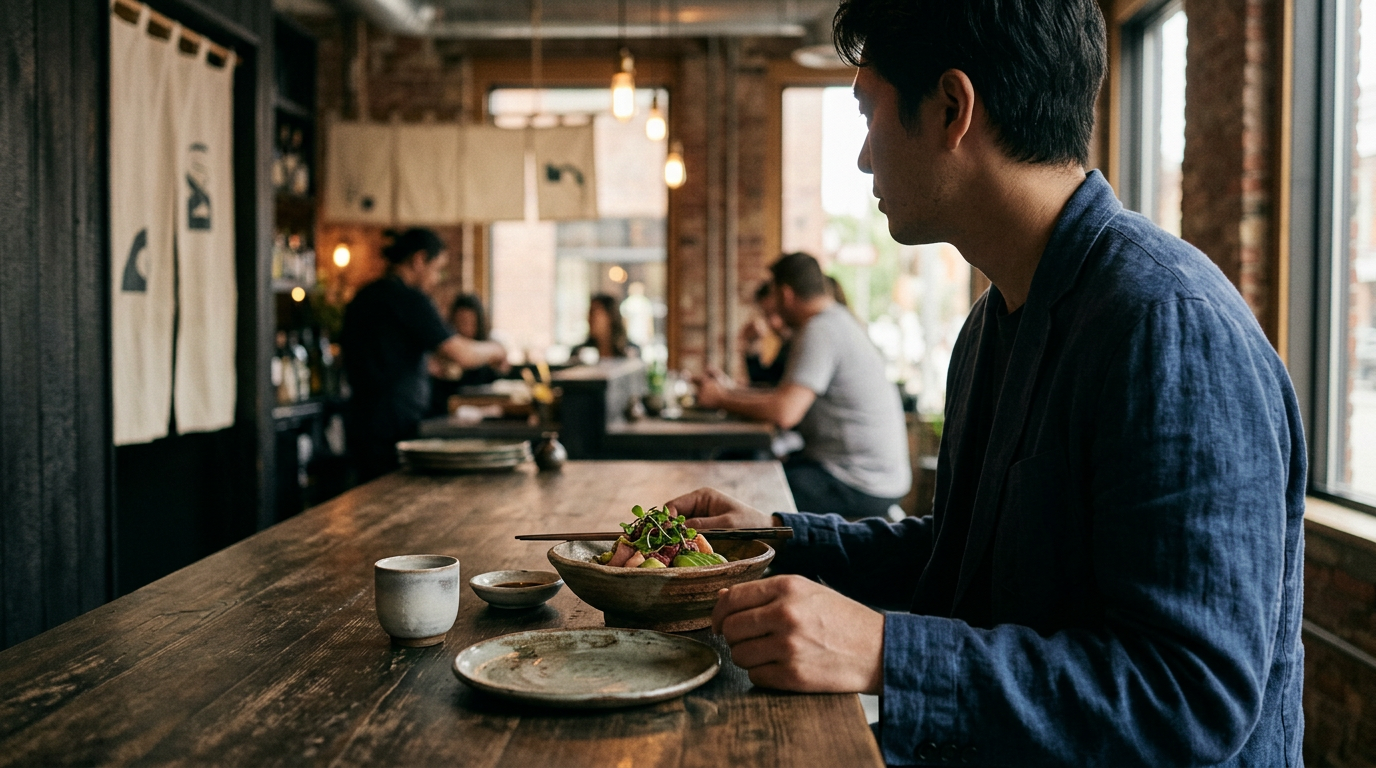
How Japanese Restaurants Abroad Adapt to Local Taste — and When It Becomes Fusion
Japanese restaurants abroad often balance authenticity with local expectations. Some changes are practical, such as using local ingredients or adjusting portion sizes. Others transform the cuisine into fusion. This guide explains where thoughtful adaptation ends and where Japanese-inspired fusion begins.
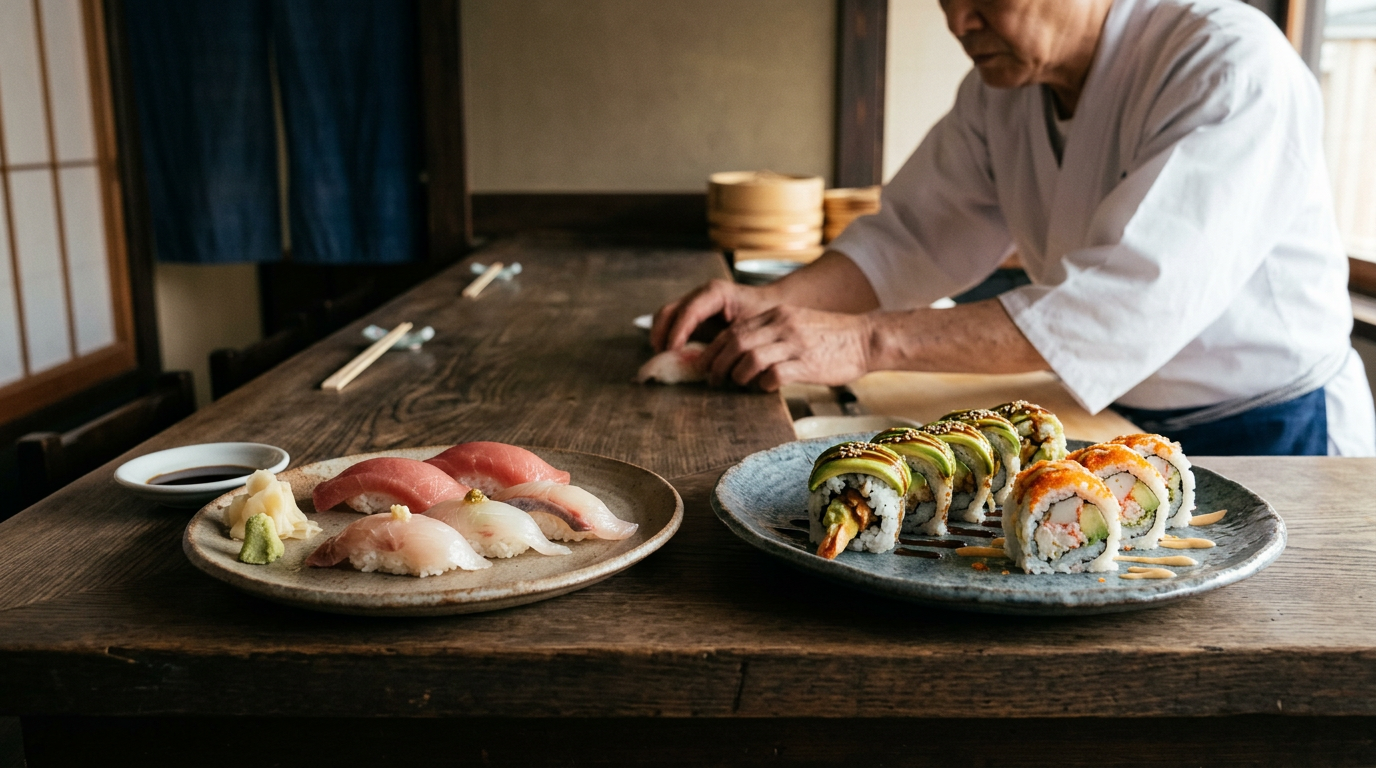
The Difference Between Authentic Sushi and Western-Style Sushi Rolls
Authentic Japanese sushi is built on rice, fish, balance, seasonality and precise technique. Western-style sushi rolls often focus more on size, sauces, toppings and visual impact. This guide explains the key differences and helps you understand what to look for when choosing a serious sushi restaurant.
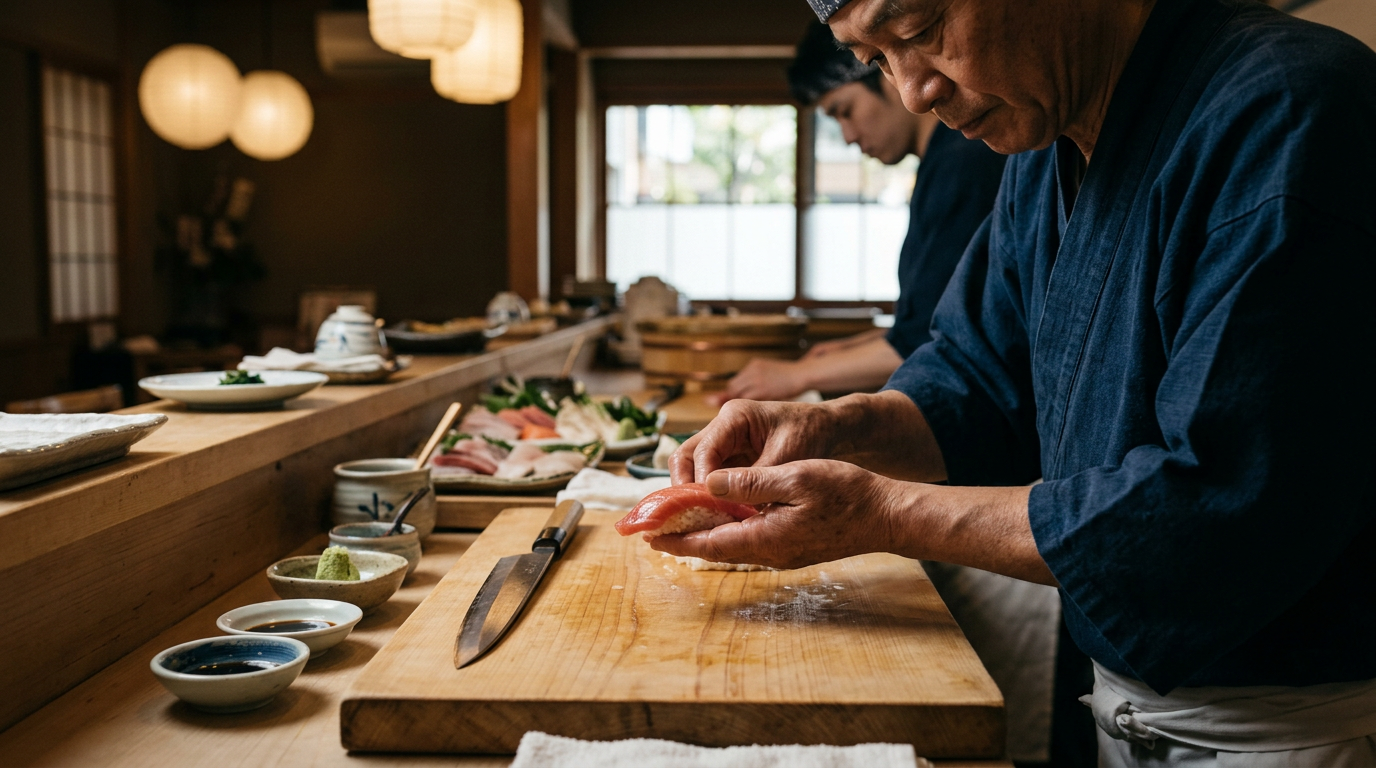
The Role of the Japanese Chef: Why Technique Matters in Authentic Japanese Cuisine
A Japanese chef often brings more than cooking skill to a restaurant. In authentic Japanese cuisine, technique, discipline, seasonality, knife work, rice preparation, dashi, balance and restraint all matter. This article explains why the chef’s background is one of the strongest signals of a truly authentic Japanese restaurant abroad.