City Guides
How to Recognize a Truly Japanese-Run Restaurant Abroad
A practical guide to identifying authentic Japanese restaurants outside Japan — beyond generic menus, fusion concepts and surface-level design.
May 22, 2026 · 6 min read
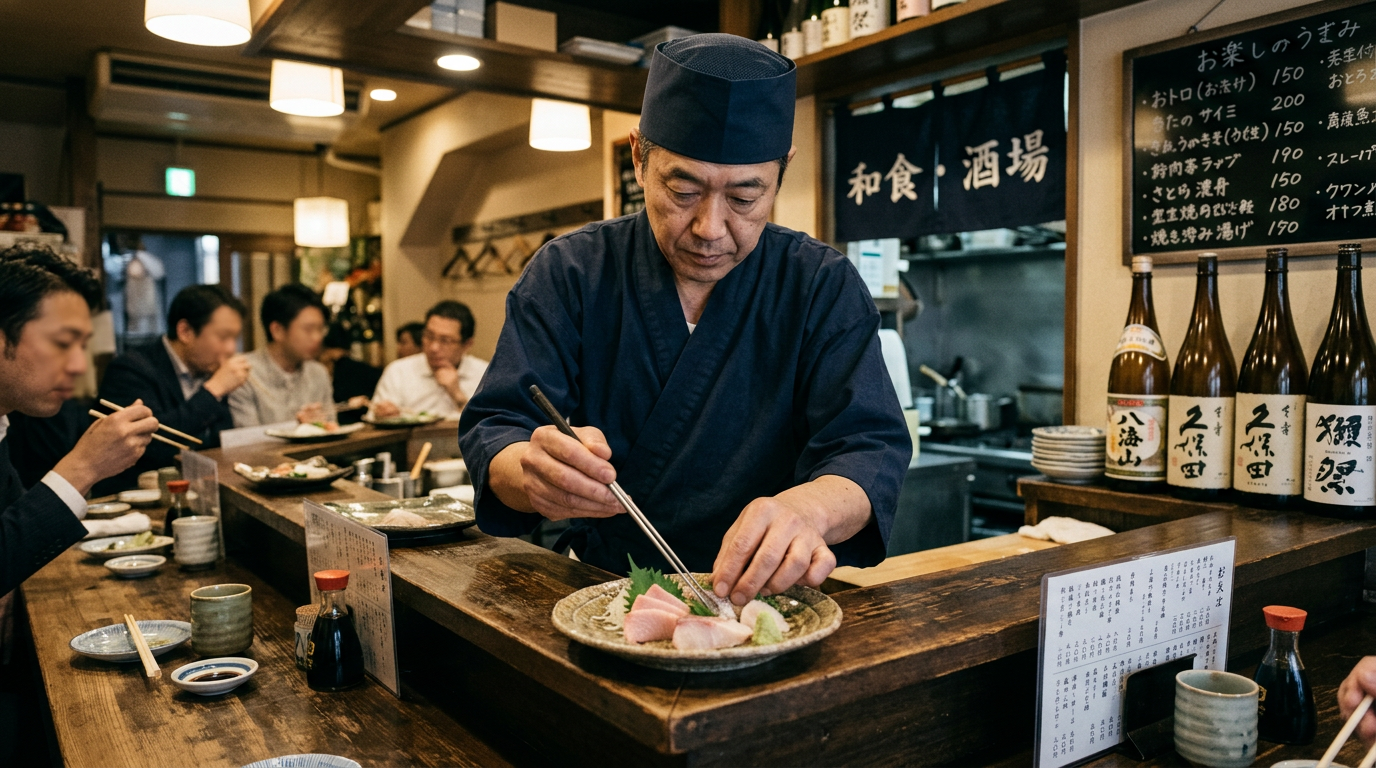
How to Recognize a Truly Japanese-Run Restaurant Abroad
Japanese restaurants can be found in almost every major city in the world. But not every restaurant that serves sushi, ramen, tempura or teriyaki is necessarily rooted in Japanese food culture. Many restaurants use Japanese names, Japanese design elements or a broad “Japanese-inspired” menu, while the actual concept, cooking style and ownership may have little connection to Japan.
This does not automatically mean the food is bad. A restaurant can be enjoyable, creative and well-run without being authentically Japanese. But if you are specifically looking for a restaurant that reflects Japanese culinary tradition, it helps to know what to look for.
At Washoku Guide, we focus on identifying restaurants that are meaningfully connected to Japanese food culture. The following criteria can help you recognize a truly Japanese-run restaurant abroad.
1. Japanese Ownership Is a Strong Signal
One of the clearest indicators of authenticity is Japanese ownership. When a restaurant is owned or operated by Japanese people, there is usually a stronger cultural connection behind the concept.
Japanese ownership often influences more than the food. It can shape the menu structure, service style, ingredient choices, atmosphere, and the way the restaurant presents itself. A Japanese-run restaurant is often less likely to follow Western expectations of what “Japanese food” should look like and more likely to reflect how Japanese food is actually understood in Japan.
This is not a perfect rule. There are excellent Japanese restaurants abroad that are not Japanese-owned. There are also Japanese-owned restaurants that may be casual, commercial or adapted to local tastes. But as a first signal, ownership matters.
2. A Japanese Chef or Kitchen Lead Matters
The chef is often even more important than the name on the door. A Japanese chef, or a chef who has trained seriously in Japan, usually brings a deeper understanding of technique, balance, seasonality and restraint.
Japanese cuisine is not only about ingredients. It is about how those ingredients are handled. Rice, broth, fish, noodles, pickles, dashi, knife work, frying temperature and seasoning balance all require specific knowledge.
In a serious Japanese restaurant, the kitchen leadership usually understands these details. This is especially important for sushi, kaiseki, soba, tempura, yakitori and traditional washoku.
3. The Menu Is Often Focused, Not Overloaded
A truly Japanese restaurant abroad often has a clear identity. It may focus on sushi, ramen, soba, izakaya food, kaiseki, teishoku, yakitori, tonkatsu or another specific category.
By contrast, many generic Japanese-style restaurants offer very broad menus: sushi, ramen, teriyaki, tempura, curry, poke bowls, Korean dishes, Thai dishes and fusion rolls all in one place. This does not necessarily mean the restaurant is bad, but it often suggests a more commercial or generalized approach.
In Japan, many restaurants specialize. A ramen shop focuses on ramen. A sushi restaurant focuses on sushi. A yakitori restaurant focuses on grilled chicken skewers. A soba restaurant focuses on soba.
A focused menu is often a positive sign.
4. Traditional Dishes Are Treated with Respect
Authentic Japanese restaurants usually show respect for classic dishes. They may modernize or adapt, but they do not usually overload every dish with heavy sauces, excessive toppings or unnecessary fusion elements.
For example, serious sushi is often restrained. The quality of the rice, fish, temperature and seasoning matters more than large rolls with many toppings. A good ramen shop focuses on broth, noodles and balance, not just size or visual drama. A proper teishoku meal is structured around rice, soup, a main dish and small sides.
Look for signs that the restaurant understands the original logic of the dish.
5. The Restaurant Does Not Try Too Hard to Look “Japanese”
Authenticity is not always loud. Some of the most authentic Japanese restaurants abroad may look simple, modest or understated. They do not necessarily need lanterns, cherry blossoms, samurai imagery or dramatic interiors.
A restaurant that relies heavily on visual clichés may be targeting a foreign idea of Japan rather than reflecting Japanese dining culture itself.
Of course, design alone does not prove anything. A beautiful interior can be authentic, and a plain restaurant can be mediocre. But in general, truly Japanese restaurants often communicate through food quality, detail and consistency rather than exaggerated decoration.
6. Japanese Customers Can Be a Useful Clue
If Japanese residents, travelers or businesspeople regularly eat at a restaurant, that can be a useful signal. Japanese customers often recognize whether the food, service and atmosphere feel familiar and credible.
This is especially relevant in cities with Japanese communities. A restaurant that is known and trusted within the local Japanese community is often worth paying attention to.
However, this should not be the only criterion. Some excellent restaurants may not have many Japanese customers simply because of location, pricing or limited visibility. Still, Japanese clientele can be an important clue.
7. Details Often Reveal the Difference
In Japanese cuisine, small details matter. These details can tell you a lot about the seriousness of a restaurant.
Look for things such as:
- Properly cooked and seasoned rice
- Balanced miso soup or dashi-based dishes
- Seasonal specials
- Good knife work
- Thoughtful plating
- Clean, precise flavors
- Pickles or small sides that are not treated as an afterthought
- Staff who can explain the food clearly
- A menu that uses Japanese terms correctly
Authenticity often appears in these quiet details rather than in obvious branding.
8. Imported Ingredients Are Helpful, but Not Everything
Some authentic Japanese restaurants use ingredients imported from Japan, such as rice, soy sauce, miso, seaweed, sake, fish, noodles or condiments. This can be a positive sign.
But imported ingredients alone do not make a restaurant authentic. Technique, taste, structure and intention matter just as much. A restaurant can import expensive ingredients and still use them poorly. Another restaurant may use local ingredients but apply Japanese technique and philosophy very well.
The best restaurants often combine Japanese culinary knowledge with thoughtful local sourcing.
9. Service Style Can Also Give Clues
Japanese hospitality, often associated with the concept of omotenashi, is attentive, respectful and detail-oriented. In restaurants abroad, this may appear in subtle ways: careful pacing, clean presentation, polite interaction, and a sense that the guest experience has been thoughtfully considered.
This does not mean every authentic Japanese restaurant must be formal. Many izakaya, ramen shops and casual teishoku places are relaxed and informal. But even casual Japanese restaurants often have a sense of order, care and consistency.
10. Authentic Does Not Always Mean Expensive
A common misunderstanding is that authentic Japanese food must be expensive. That is not true. Some of the most authentic Japanese restaurants are casual ramen shops, small izakaya, family-run teishoku restaurants or simple noodle places.
Authenticity is not defined by luxury. It is defined by cultural connection, technique, intention and respect for the cuisine.
A modest Japanese-run restaurant with a focused menu may be more authentic than a high-end restaurant that mainly sells a Westernized idea of Japanese food.
A Practical Checklist
When evaluating a Japanese restaurant abroad, ask yourself:
- Is the restaurant Japanese-owned or Japanese-operated?
- Is the chef Japanese or seriously trained in Japanese cuisine?
- Does the menu have a clear focus?
- Are traditional dishes handled with restraint and respect?
- Does the restaurant avoid excessive fusion or cliché presentation?
- Do Japanese customers appear to trust it?
- Are the small details well executed?
- Does the food feel balanced rather than overloaded?
- Is there a real connection to Japanese food culture?
No single answer proves authenticity. But together, these signals help create a reliable picture.
Final Thought
Recognizing a truly Japanese-run restaurant abroad requires looking beyond the surface. A Japanese name, sushi on the menu or minimalist interior design is not enough. The more important questions are: who runs the restaurant, who leads the kitchen, how focused is the concept, and how seriously does the restaurant treat Japanese culinary tradition?
That is the purpose of Washoku Guide: to help diners discover Japanese restaurants that are not only Japanese in appearance, but genuinely connected to Japanese food culture.
Restaurants featured in this guide
Düsseldorf
Ah-Un Japanese Yakiniku
Ah-Un is Düsseldorf's premier yakiniku restaurant, owned by Japanese gastronomer Shu Kanemaki, where guests grill premium Wagyu beef at table-mounted charcoal grills in a setting featured on Apple TV.
London
Ajimi
Reputable Japanese family-run restaurant in Acton serving authentic sushi, karaage and traditional dishes with a skilled kitchen and warm hospitality.
Lisbon
Aron Sushi
Aron Sushi is consistently cited by Time Out and Observador as one of Lisbon's most authentic sushi bars, run by chef-owner Aron Vargas, a direct disciple of Japanese master Takashi Yoshitake.
Miami
Aoki Teppanyaki Miami
Kevin Aoki, son of the legendary Rocky Aoki (Benihana), carries the next generation of Japanese teppanyaki artistry to Dadeland Mall: precise show cooking, izakaya sides, and wagyu grills.
New York
Arigato Japanese Sushi
A long-running Edgewater sushi restaurant on River Road, in operation for over 35 years offering traditional Japanese cuisine and creative sushi.
Copenhagen
Aotori
Aotori opened in January 2026 as Copenhagen's dedicated yakitori counter, led by Japanese chef Daichi Suminoe from Osaka, grilling premium chicken and vegetables over binchotan charcoal at a strictly intimate 8-seat bar.
Continue reading
Best Sushi in Houston: 10 Authentic Spots (2026)
Houston’s sushi scene is much deeper than casual rolls and delivery menus. From Chef Hori’s Japanese-rooted restaurants to intimate omakase counters, hand roll bars, polished Galleria sushi rooms and modern Japanese dining, the city offers a wide range of serious sushi experiences. This guide highlights 10 Houston sushi spots worth knowing in 2026 — and explains what kind of sushi experience each one represents.
Where to Find Authentic Japanese Restaurants in New York City
New York City is one of the world’s great Japanese dining cities. East Village offers Little Tokyo-style restaurant culture, Midtown is strong for sushi, ramen and business dining, NoHo and SoHo have some of the city’s most serious omakase counters, and Brooklyn’s Japan Village brings Japanese food, groceries and casual dining together in one place. This guide explains where to look for authentic Japanese restaurants in NYC — and how to choose the right neighbourhood for sushi, ramen, izakaya, omakase, soba, yakitori and everyday Japanese food.
Where to Find Authentic Japanese Restaurants in Los Angeles
Los Angeles is one of the best cities in North America for Japanese food. Little Tokyo offers history and cultural depth, Sawtelle Japantown is a major West LA dining corridor, and Torrance and Gardena in the South Bay are home to some of the region’s most serious Japanese restaurants. This guide explains where to look for authentic Japanese restaurants in Los Angeles — from sushi and ramen to izakaya, soba, yakitori, omakase and everyday Japanese dining.