Cuisine & Culture
How to Behave at an Omakase Counter: A Practical Guide
May 5, 2026 · 8 min read
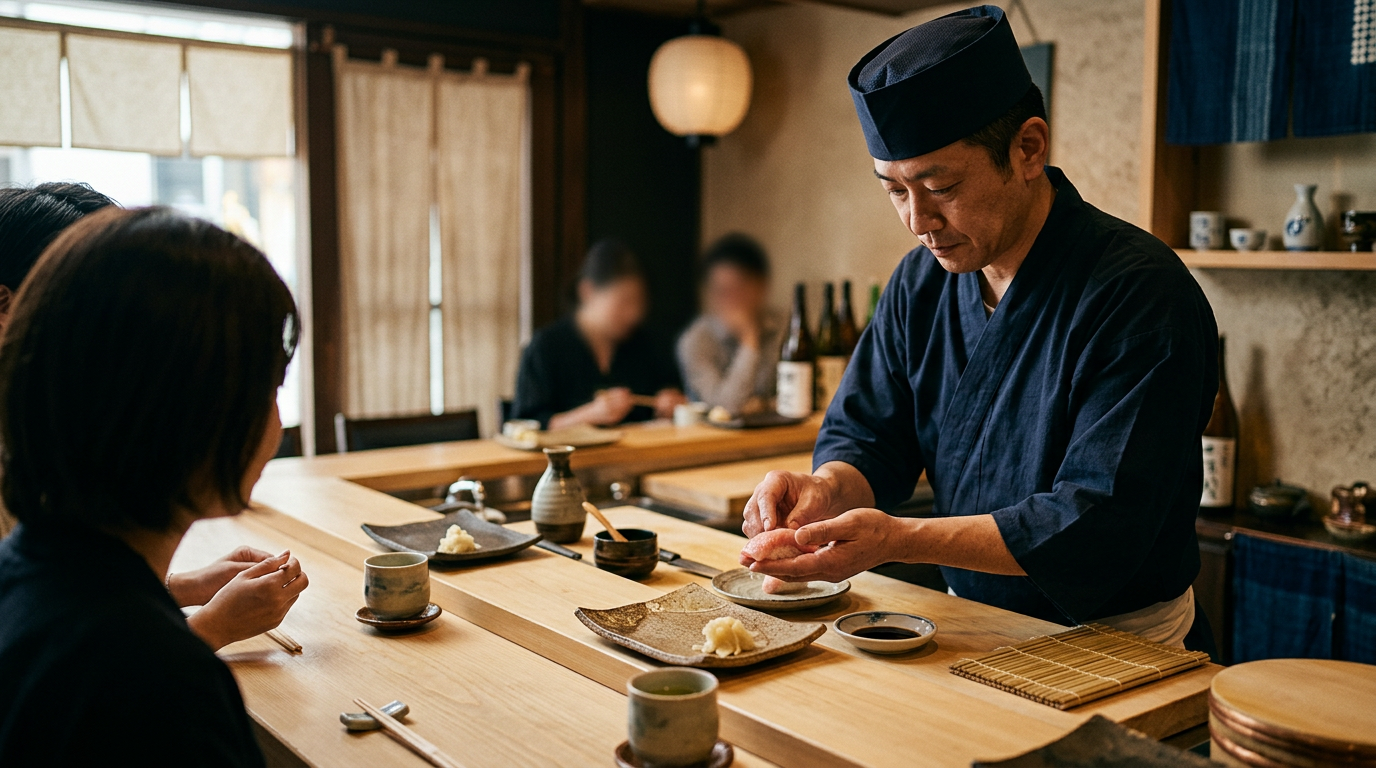
The anxiety around omakase etiquette is, in most cases, worse than the reality. People who have never sat at a serious sushi counter imagine a minefield of unspoken rules enforced by a stern chef in silence. What they typically find instead is a focused, intimate meal where a few simple principles cover almost every situation that will arise.
That said, the principles are worth knowing. An omakase counter is not a conventional restaurant, and the experience rewards a degree of preparation that ordering from a menu does not. This guide covers what actually matters — before you arrive, during the meal, and on the way out.
Before You Arrive
Communicate dietary restrictions at booking, not at the counter.
This is the single most important thing you can do before an omakase meal, and it is more consequential than any behavior during the meal itself. Omakase chefs work with a fixed sequence of courses sourced days in advance. A serious shellfish allergy declared at the counter is genuinely difficult to accommodate. Disclosed at booking, it can usually be handled gracefully.
The same applies to preferences rather than allergies — if you strongly dislike sea urchin, or would rather not eat raw fish, say so when you reserve. A good chef will adapt. Springing it mid-meal is unfair to the kitchen and will produce inferior results for you.
Arrive on time. If anything, arrive slightly early.
Omakase seatings typically run as a group, meaning the chef begins when everyone is seated. If you are late, you delay the meal for everyone at the counter. Most serious counters will hold your reservation for ten or fifteen minutes and then seat without you, or compress your courses to keep the kitchen on schedule. Neither outcome is good.
Being a few minutes early is not just polite — it gives you time to settle, look at what's behind the counter, and not feel rushed when the meal starts.
Dress with some thought, but don't overthink it.
There is no universal dress code for omakase. In Tokyo, many serious counters are smart-casual. In New York or London, the range is wider. A useful rule: dress as you would for a meal you consider significant. The formality of the space will usually be apparent from the restaurant's website or booking confirmation.
Avoid strong perfume or cologne. You are sitting close to other diners and, in many cases, to the chef. Fragrance at an omakase counter is actively disruptive — it competes with the smell of rice, fish, and seasoning in a way that flat-out doesn't happen at a regular table.
At the Counter
Sit where you're placed.
At most omakase counters, seating is assigned or at least guided. If you have a preference — an end seat, or directly in front of the chef — it's fine to mention it at booking, but don't rearrange once you're in the room. The chef typically positions guests deliberately, often placing first-timers where they'll have the clearest sightlines to the work.
You are allowed to watch.
This sounds obvious, but many first-timers feel awkward staring at what the chef is doing. Don't. Watching is part of the experience. Observing how rice is pressed, how a fish is sliced, how a piece is seasoned — this is information that will make the meal more interesting and the flavors more legible. A good chef knows you're watching and, at the right moment, may explain what they're doing without being asked.
Talk to the chef — but read the rhythm.
An omakase counter is not a silent room. Conversation between chef and diner is part of the form. You are expected to engage — to ask about the fish, to mention where a piece came from if the chef doesn't volunteer it, to express what you're tasting. This is not a performance requirement. But closed-off, phone-absorbed diners who eat without acknowledgment are genuinely deflating for a chef who has spent days preparing.
The caveat is timing. A chef mid-cut or in the middle of seasoning is not the moment for a long question. There is a rhythm to an omakase meal — moments of focused work and moments of conversation — and it becomes readable within the first few courses. When the chef places something in front of you and makes eye contact, that is usually an invitation to engage.
Eat each piece when it's served.
This matters more than almost any other single thing during the meal. Nigiri in particular is calibrated at the moment it leaves the chef's hand — the temperature of the rice, the texture of the fish, the binding between them. Waiting even two or three minutes changes what you are eating in ways that are not subtle. If you are mid-conversation, finish the thought after the piece, not before.
This also means not waiting for your companion to be served before eating. Omakase is not like a dinner table where everyone eats together. Each piece is meant to be eaten immediately.
How to Eat
Hands or chopsticks — either is correct.
The old received wisdom that sushi must be eaten by hand is a simplification. In Japan, both are acceptable at a sushi counter, and most chefs outside Japan will not care either way. What matters is that you eat the piece whole, in one bite if at all possible. Biting a piece of nigiri in half and setting the remainder down is the one thing almost universally considered poor form — it disrupts the composition and produces an undignified result.
On soy sauce: use it sparingly, and don't dunk.
At a serious omakase counter, many pieces will already be seasoned by the chef — brushed with a reduction, touched with salt, finished with a specific citrus. Adding soy sauce on top of that seasoning is the equivalent of salting a dish before tasting it. The chef has already done the work.
When soy sauce is appropriate — for some pieces it genuinely is — dip the fish, not the rice. Rice soaks up liquid immediately, which disintegrates the nigiri and makes the bite too salty.
Wasabi is almost always incorporated directly into the piece at a serious counter. If it isn't and you want it, ask. Don't dissolve it into your soy sauce — this is, for reasons of texture and flavor delivery, the one genuine etiquette point that chefs genuinely notice.
Drink at the pace of the meal.
Most omakase counters offer sake, beer, wine, or a pairing menu. Drink what you enjoy, but pace it to the food. An omakase meal is not a drinking session with food alongside it — the flavors in each course are specific and worth tasting clearly. Arriving already warm from pre-dinner drinks, or accelerating through sake to keep up with anxiety, will blunt the meal in ways you'll notice.
If you want to try something specific, ask. Chefs and staff at serious counters tend to know their pairings well and enjoy the conversation.
Photography
This is the question that generates the most debate, and the honest answer is: it depends on the room.
Some counters have no objection to photography. Others — particularly in Japan, but increasingly in major cities — prefer that phones stay off the counter. The signal is usually visible in the room: if other diners have phones out, it's likely fine. If the counter is sparse and quiet and no one is photographing, follow suit.
When in doubt, ask. "Is it alright if I take a photo?" is a completely normal thing to say at any restaurant, and the answer will tell you everything you need to know.
What is universally considered poor form is using flash, holding up your phone for extended periods in a way that blocks the chef's workspace, or photographing other diners without their consent. One clean photo per course, quickly, is the outer limit of what works in a focused counter setting.
Tipping
Tipping at omakase counters varies by country and, increasingly, by individual restaurant.
In the United States, tipping at the standard rate (18–22%) is expected and appropriate. Some high-end counters include a service charge; check before adding more.
In the United Kingdom and most of Europe, a tip of 10–15% is appreciated but not assumed. Many serious counters include a discretionary service charge.
In Japan, tipping is not practiced and, in traditional settings, can cause discomfort. The price of the meal is the complete transaction.
If you are unsure, asking the restaurant when you book — "is gratuity included?" — is a completely reasonable question and will get you a straight answer.
A Few Things That Don't Matter As Much As You Think
The etiquette anxiety around omakase is often directed at the wrong targets. Some things that regularly worry first-timers genuinely do not matter:
Whether you can identify every fish by sight. You cannot, and neither can most people. Ask.
Whether your Japanese is good enough. It isn't required. A warm, engaged presence communicates everything a chef needs from you.
Whether you finish every piece. If something genuinely doesn't work for you — a texture, a flavor — you don't have to eat it. Quietly setting it aside is fine. Gagging theatrically is not.
Whether you are "sophisticated enough" for the experience. Omakase counters regularly serve first-timers. The chefs know this and most of them enjoy it. Curiosity and attention are sufficient preparation.
Frequently Asked Questions
What should I wear to an omakase restaurant? Smart-casual is reliable for most counters. The more important consideration is fragrance: avoid strong perfume or cologne, as you are sitting in a small space close to other diners and the chef's work.
Can I request specific fish at an omakase counter? Generally, no — omakase means "I leave it to you," and the sequence is the chef's decision. Most counters will note preferences disclosed at booking. During the meal, expressing genuine enthusiasm for something you enjoyed is welcome; directing the menu is not.
Is it rude to use chopsticks instead of eating sushi by hand? No. Both are acceptable. Eat each piece whole, promptly after it's served, and you've covered what matters.
How long does an omakase meal typically last? Most counters run between 90 minutes and two and a half hours, depending on the number of courses and the pace of conversation. Some kaiseki-influenced omakase can run longer. The booking confirmation will usually give you an indication.
Can I take photos at an omakase counter? It depends on the restaurant. When in doubt, ask. If photography is welcome, keep it quick and flashless. Phones on the counter throughout the meal — regardless of what the restaurant policy is — are generally considered inconsiderate.
Should I tip at an omakase restaurant? It varies by country. In the United States, yes — standard restaurant tipping applies. In Japan, no. In Europe, a modest tip or included service charge is typical. Check when you book if you're unsure.
Looking for an omakase counter in your city? Browse Washoku Guide's curated sushi listings →
Continue reading
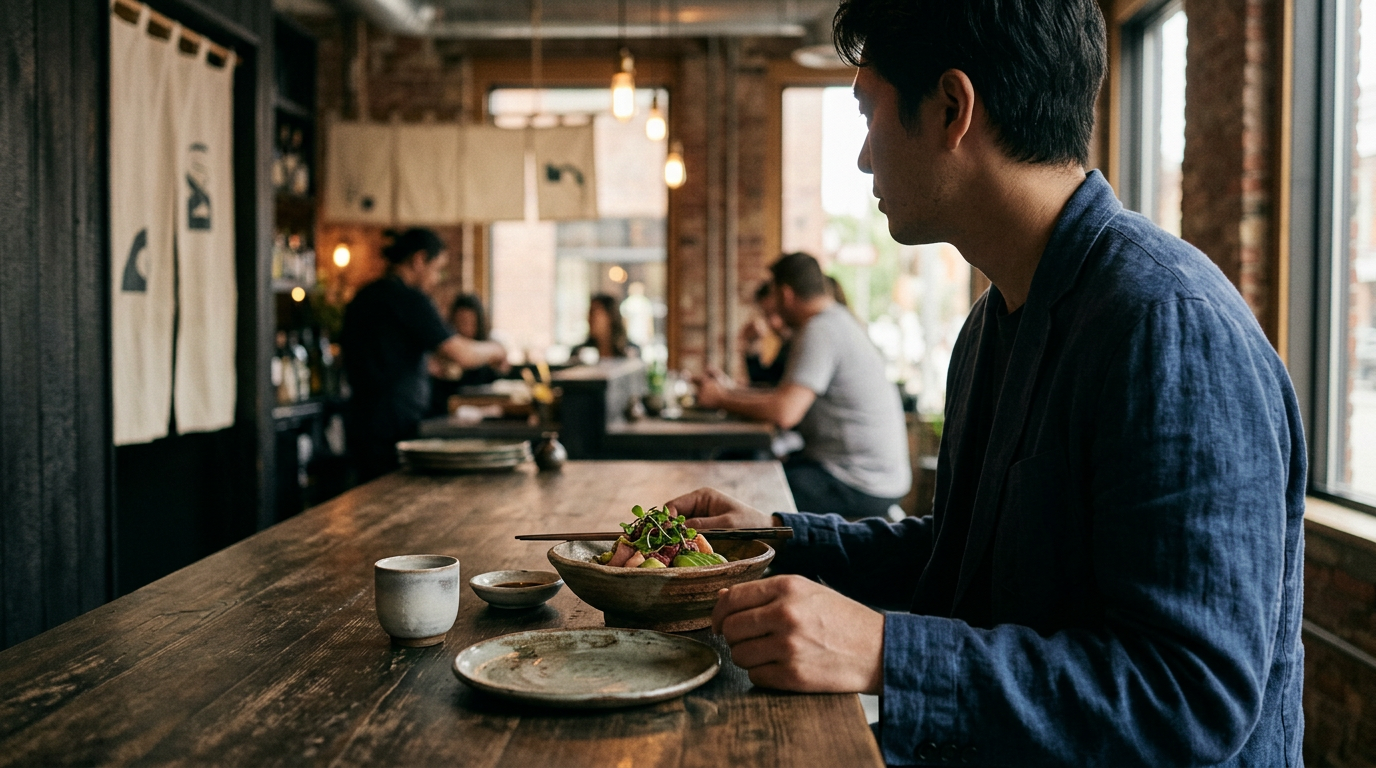
How Japanese Restaurants Abroad Adapt to Local Taste — and When It Becomes Fusion
Japanese restaurants abroad often balance authenticity with local expectations. Some changes are practical, such as using local ingredients or adjusting portion sizes. Others transform the cuisine into fusion. This guide explains where thoughtful adaptation ends and where Japanese-inspired fusion begins.
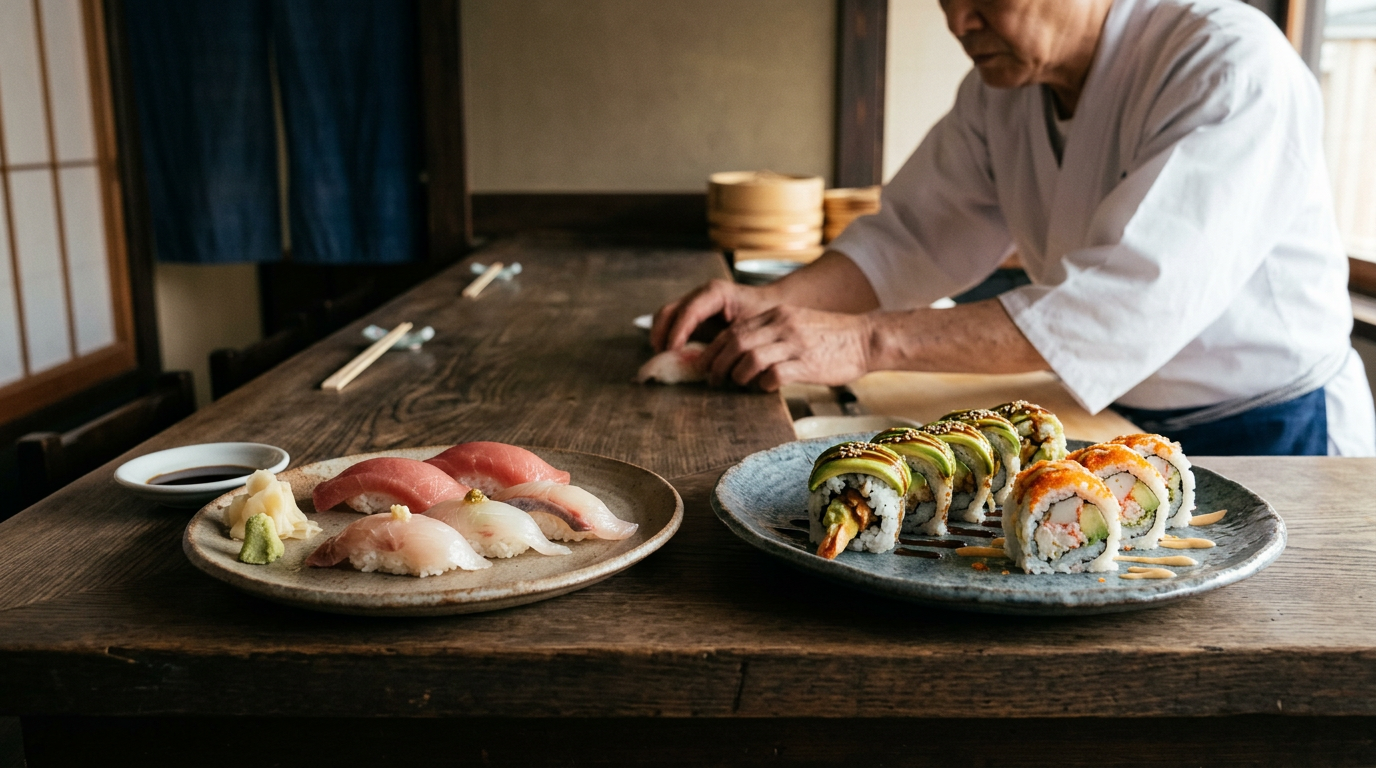
The Difference Between Authentic Sushi and Western-Style Sushi Rolls
Authentic Japanese sushi is built on rice, fish, balance, seasonality and precise technique. Western-style sushi rolls often focus more on size, sauces, toppings and visual impact. This guide explains the key differences and helps you understand what to look for when choosing a serious sushi restaurant.
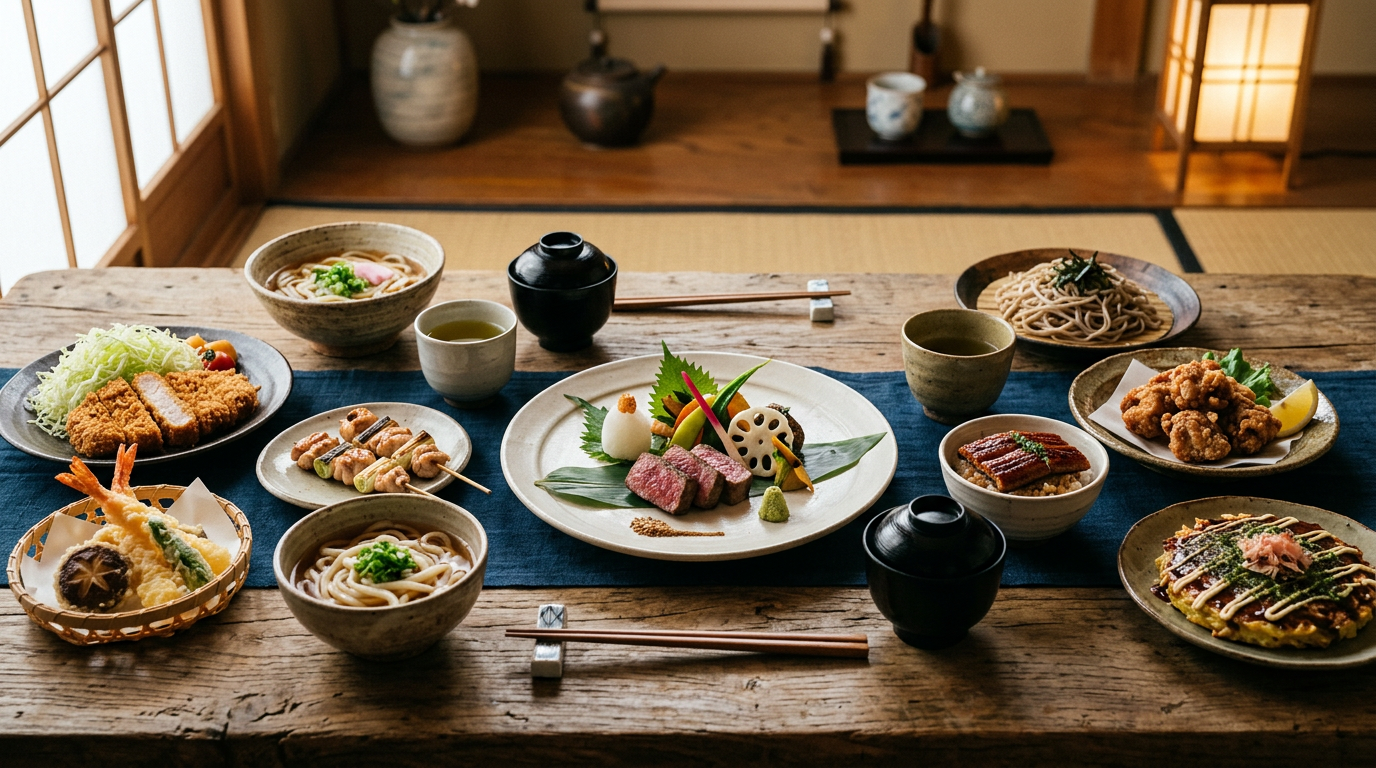
Beyond Sushi and Ramen: 10 Japanese Dishes You Should Know Before Choosing a Restaurant
Sushi and ramen may be the most famous Japanese foods abroad, but they represent only a small part of Japanese cuisine. From teishoku and tonkatsu to yakitori, soba, tempura and donburi, this guide introduces ten essential Japanese dishes and dining formats that can help you choose a better, more authentic Japanese restaurant.