Cuisine & Culture
Why Yelp and TripAdvisor Fail at Japanese Cuisine (And What to Use Instead)
April 25, 2026 · 8 min read
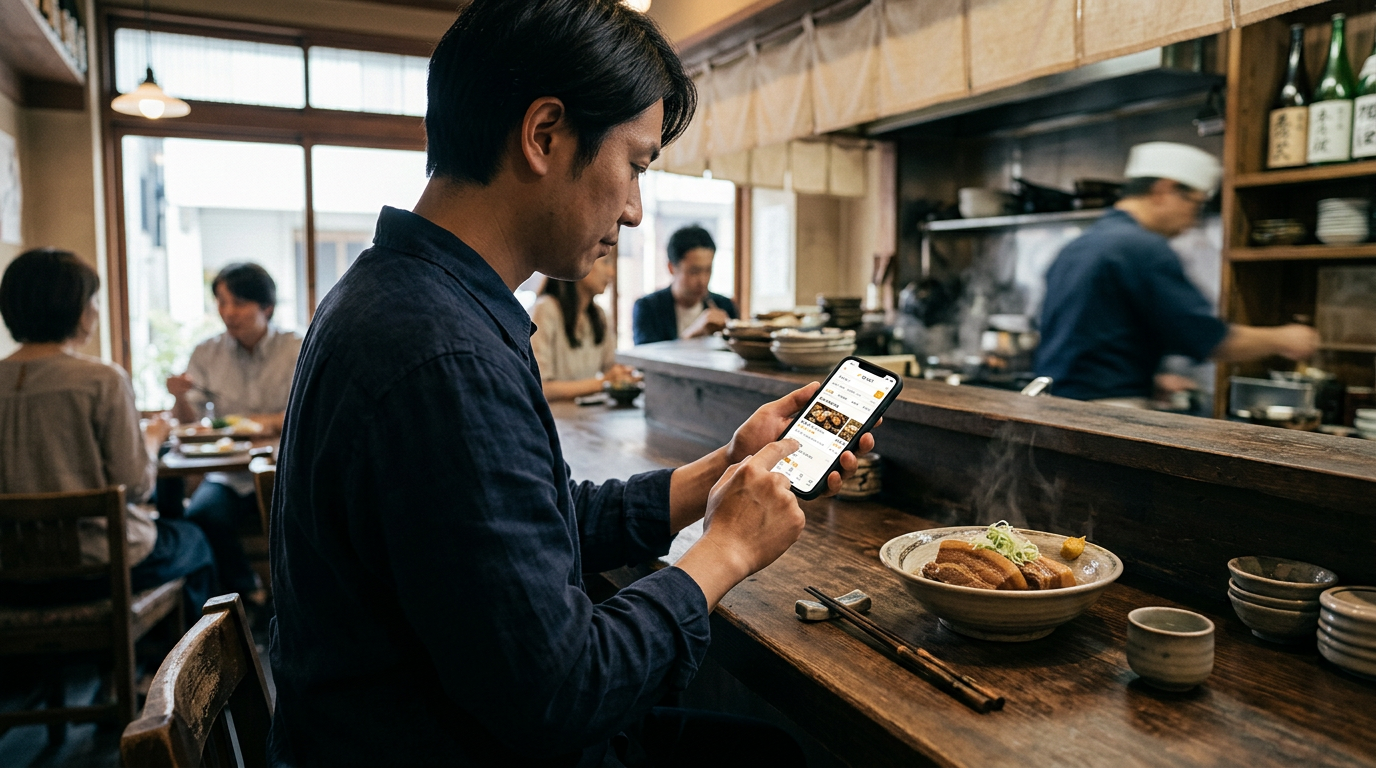
Crowdsourced vs. Curated: Why Rating Apps Fail Japanese Cuisine
There is a particular experience that many people who love Japanese food have had at some point outside Japan. You search for a sushi restaurant in the city you are visiting. The top result on Yelp or TripAdvisor has 4.6 stars and several hundred reviews. The photos look decent. You go. The rice is warm, the fish is pre-sliced, the wasabi comes from a tube. You eat it, it's fine, and you go home slightly disappointed without quite being able to say why.
The rating app did not lie to you. It just answered a different question than the one you were asking.
This piece is about that gap — between what crowdsourced platforms are built to measure and what it actually takes to assess Japanese cuisine with any reliability. Understanding it is useful whether you use Washoku Guide or not.
What Star Ratings Actually Measure
Rating platforms are, at their core, aggregation machines. They collect the responses of large numbers of people and average them into a score. The premise is democratic and appealing: many opinions are more reliable than few, expertise is distributed, and the crowd collectively knows more than any individual critic.
This works reasonably well for some things. If a hotel is consistently dirty or a delivery service is consistently late, a large volume of reviews will surface that pattern. The crowd is good at detecting consistent, obvious failures.
What the crowd is not good at is evaluating quality in fields that require specialized knowledge. A wine drinker who doesn't know the difference between a Burgundy and a Beaujolais can still rate their experience at a restaurant. A diner who has never eaten real tonkotsu in Fukuoka can still give five stars to a bowl of instant-adjacent ramen with a photogenic egg on top. Their experience is genuine. Their rating reflects their enjoyment. But it tells you nothing about whether the food is any good by the standards that matter.
Japanese cuisine is precisely this kind of field.
The Specific Ways Platforms Get Japanese Food Wrong
The failure is not random. Rating apps systematically skew in the same directions when applied to Japanese cuisine, and understanding those directions is useful.
They reward familiarity. The most-reviewed Japanese restaurants in any major Western city tend to be accessible, Westernized, and visually impressive. All-you-can-eat sushi operations accumulate enormous review counts. Restaurants that offer tableside theatrical cooking do well. Venues with English menus, English-speaking staff, and decor that signals "Japan" to a non-Japanese audience out-perform quieter, more serious rooms. None of these things have any bearing on the quality of the food.
They punish difficulty. An omakase counter where you sit close to strangers, where the meal moves at the chef's pace and not yours, where there is no menu to photograph, and where the experience rewards a degree of knowledge you may not yet have — this kind of restaurant is structurally disadvantaged in crowdsourced systems. Reviewers who feel confused or underdressed or unsure how to eat the food will not rate the experience well, regardless of whether the food is exceptional.
They cannot account for what's absent. A significant portion of what makes Japanese food authentic is invisible to someone who doesn't know to look for it. The temperature of sushi rice — which should be body temperature, never cold — cannot be photographed. The proportion of dashi in a broth cannot be tasted by someone who has never had properly made dashi. The aging of fish, the sourcing of specific regional varieties, the knife work on a piece of flounder: none of these announce themselves to an uninformed diner, and none will appear in reviews.
They conflate price and quality. A cheap, cheerful ramen spot will outperform an expensive, serious one in any popularity contest, because the value-for-money heuristic dominates. Price is legible to everyone. Quality is not. This distortion is particularly acute in Japanese cuisine, where some of the most serious cooking — kaiseki, edomae sushi, kappo — exists at a price point that many reviewers will penalize reflexively.
They are gamed easily. Any restaurateur with a moderate marketing budget can acquire enough four- and five-star reviews to dominate a local category. Review manipulation is a documented, widespread practice on every major platform. The platforms address it imperfectly. In any given city's "Top Japanese Restaurants" list, a meaningful percentage of the high-ranked results reflect marketing activity rather than culinary merit.
The Problem With the Alternative
It would be convenient to simply say: use Michelin instead. And for kaiseki and high-end sushi, Michelin is genuinely useful — the inspectors are trained, the process is consistent, and the stars carry real information.
But Michelin covers a tiny fraction of the Japanese restaurant landscape. It has no opinion on the ramen shop with the best Hokkaido-style broth in Berlin, or the izakaya in Melbourne run by a Japanese family for thirty years. It doesn't cover most cities outside a handful of culinary capitals. And its evaluative framework, designed for European fine dining, has its own distortions when applied to Japanese cuisine — it historically underweighted the izakaya and donburi traditions in favor of kaiseki and omakase.
Food media is similarly limited. Long-form restaurant criticism is increasingly rare. Where it exists, it tends to cluster around the same marquee restaurants in the same cities, following the same prestige logic that ratings platforms do, just with more sophisticated prose.
Neither crowdsourced reviews nor traditional criticism was built to answer the specific question that many Japanese food lovers actually have: not "is this restaurant good by general standards?" but "is this restaurant doing what it claims to do, by the standards of the tradition it belongs to?"
What Curation Actually Means
Curation is a word that gets used loosely, so it's worth being precise about what it requires.
A curated guide is not simply a filtered rating platform. Removing restaurants below a certain star threshold is aggregation with a higher cutoff, not curation. True curation requires human judgment applied to a defined set of criteria, consistently, by people who understand what they are evaluating.
For Japanese cuisine specifically, that means knowing what edomae sushi technique actually looks like in practice — and being able to distinguish it from sushi that borrows the vocabulary without the substance. It means understanding what dashi should taste like, and why it matters. It means knowing the difference between a yakitori kitchen using real binchotan charcoal and one using a gas grill with grill marks. These are not things a star rating can capture, because they are not things most diners know to look for.
It also means being willing to exclude. A curated guide that includes everything is not a guide — it is a database. The value of curation comes precisely from the restaurants that don't appear, and from the coherence of the reasoning that kept them out. Washoku Guide [→ Methodology] lists fewer than two thousand restaurants across fifty-one cities. There are tens of thousands of Japanese restaurants in those cities. Most of them are fine. Very few of them are what the guide is looking for.
Why This Matters More for Japanese Food Than Almost Any Other Cuisine
Every cuisine suffers some degree of distortion in crowdsourced systems. But Japanese cuisine is particularly vulnerable for a structural reason: it is among the most technically demanding, most regionally specific, and most context-dependent culinary traditions in the world — and it has also, over the past two decades, become one of the most globally imitated.
This creates an unusual situation. The gap between a serious Japanese restaurant and a convincing-looking approximation is wide. But the gap is largely invisible to anyone who hasn't eaten enough of the real thing to know what they're missing. Sushi is sushi. Ramen is ramen. The aesthetic language of Japanese dining — the wooden counters, the minimal plating, the specific vocabulary on the menu — can be borrowed without the substance, and often is.
In French cuisine, the equivalent problem exists but is somewhat self-correcting: there are enough trained critics, enough French expatriates, enough people who have eaten in France, that obvious imitations get called out. The Japanese diaspora is smaller in most cities, the culinary education among Western diners is thinner, and the visual language of Japanese restaurants travels more easily than the substance. Crowdsourced platforms, operating on volume and consensus, are simply not equipped to close that gap.
A Note on What This Guide Is Not Claiming
Curation is not infallible. A curated guide reflects the judgment of its curators, which can be wrong. It reflects a specific definition of authenticity — in this case, Japanese ownership, Japanese head chefs, or demonstrably traditional technique — which is a principled position, not a universal truth. Excellent Japanese food can be cooked by people of any background. Fusion is a legitimate form. Adaptation is how any cuisine survives transplantation.
Washoku Guide does not claim to rank the best restaurants in any city. It curates for a specific thing: the experience of Japanese cuisine as a living culinary tradition, for diners who are specifically looking for that. If that is not what you are looking for, a rating platform will serve you fine.
If it is what you are looking for, you have almost certainly already noticed the gap.
Frequently Asked Questions
Why aren't Yelp and TripAdvisor reliable for finding authentic Japanese restaurants? Both platforms aggregate user reviews regardless of culinary expertise. For Japanese cuisine — which requires significant background knowledge to evaluate properly — this produces systematic distortions: familiar, accessible restaurants outperform serious ones; price is conflated with quality; and the technical markers of authenticity (rice temperature, dashi quality, sourcing, technique) are invisible to most reviewers.
Is Michelin a better alternative for Japanese restaurants? For high-end sushi and kaiseki in major cities, yes — Michelin inspectors are trained and consistent. But Michelin covers a small fraction of the Japanese restaurant landscape, has no presence in most cities, and its framework has historically underweighted everyday formats like ramen, izakaya, and donburi.
What does "curated" mean for a restaurant guide? Genuine curation means human judgment applied to a consistent set of criteria by people who understand the cuisine being evaluated. It is not filtered aggregation or a ranked popularity list. A curated guide's value comes from what it excludes as much as what it includes.
Can non-Japanese chefs cook authentic Japanese food? Yes. Washoku Guide's listing criteria include restaurants that follow recognized traditional Japanese culinary methods, regardless of the chef's background. Technique and approach matter; nationality alone does not determine authenticity.
How does Washoku Guide decide which restaurants to include? At least one of three criteria must apply: Japanese ownership, a Japanese head chef, or a demonstrably traditional culinary approach specific to the restaurant's format. The full methodology is explained here.
Washoku Guide is the world's only curated global directory dedicated exclusively to authentic Japanese cuisine. Browse restaurants by city or explore by restaurant type.
Continue reading
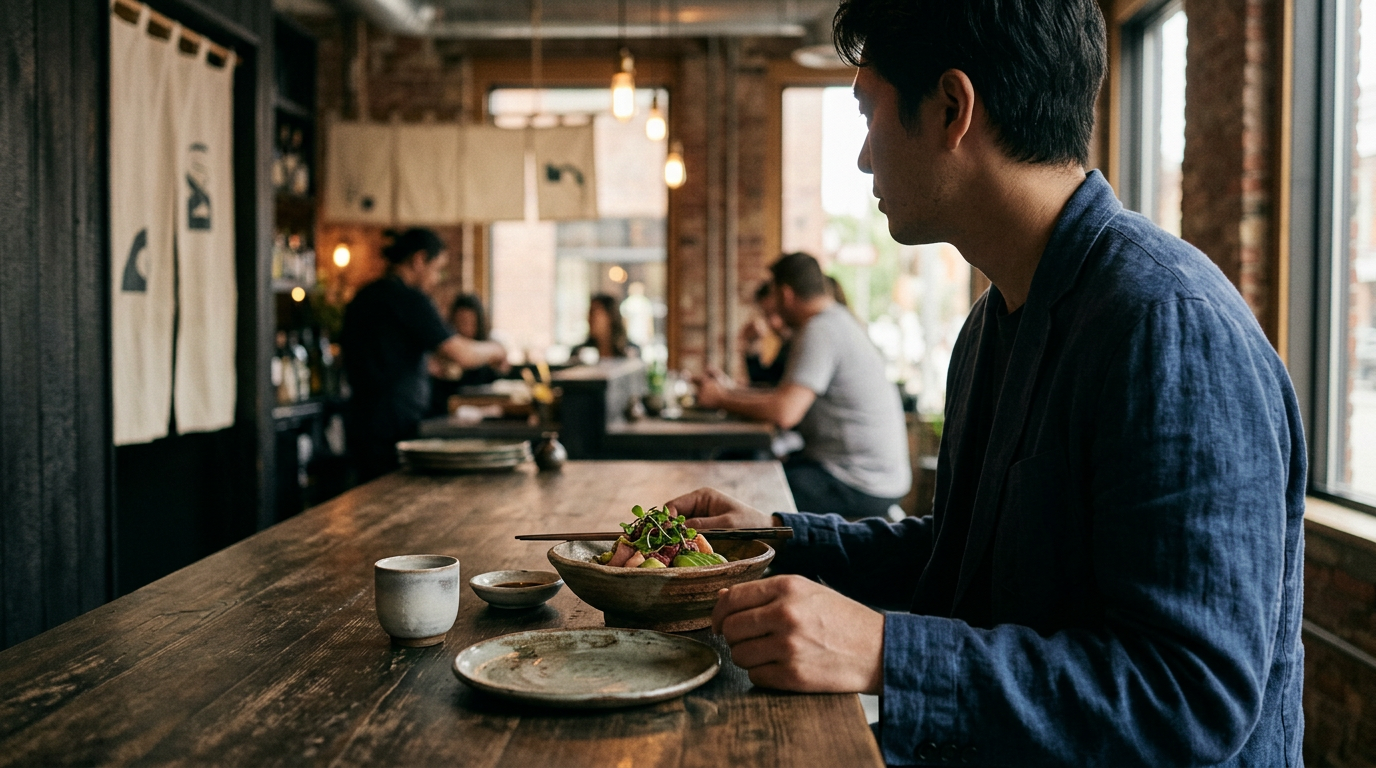
How Japanese Restaurants Abroad Adapt to Local Taste — and When It Becomes Fusion
Japanese restaurants abroad often balance authenticity with local expectations. Some changes are practical, such as using local ingredients or adjusting portion sizes. Others transform the cuisine into fusion. This guide explains where thoughtful adaptation ends and where Japanese-inspired fusion begins.
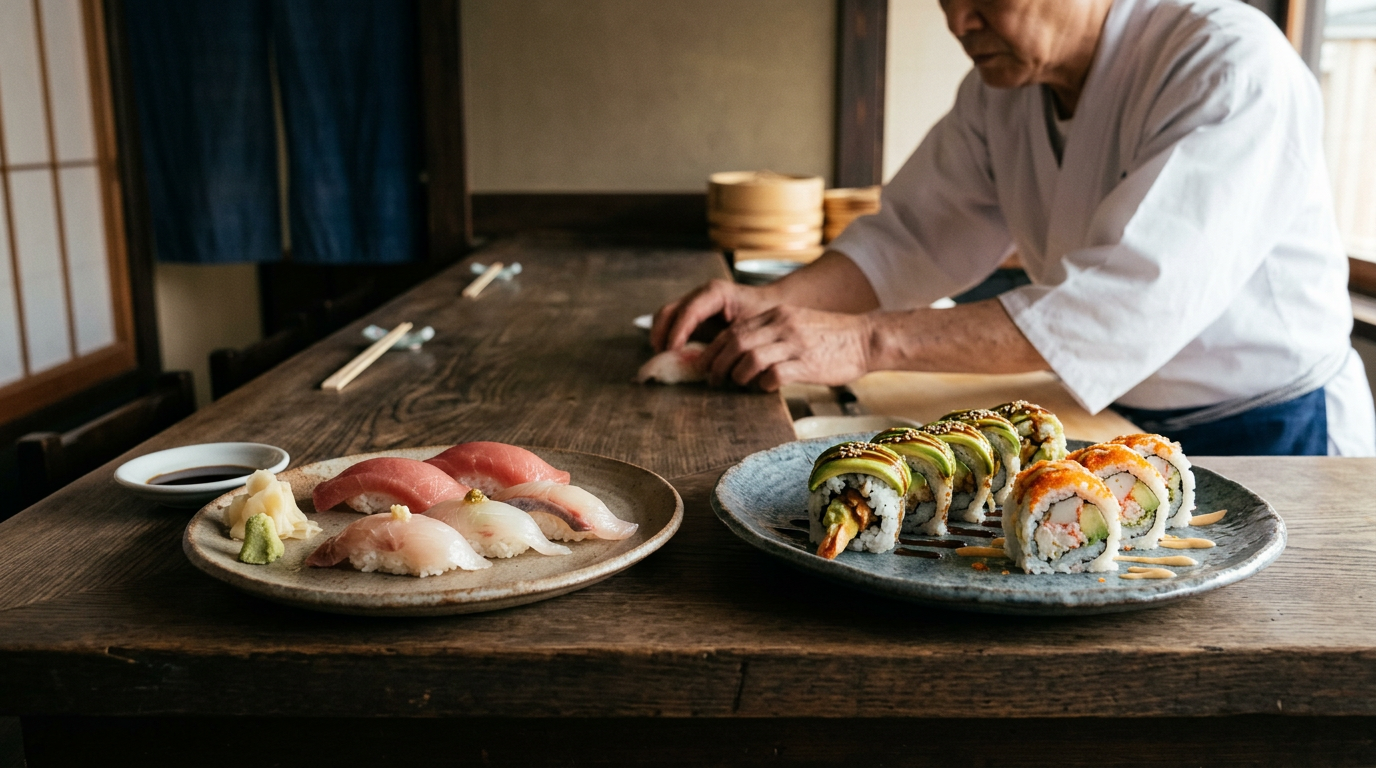
The Difference Between Authentic Sushi and Western-Style Sushi Rolls
Authentic Japanese sushi is built on rice, fish, balance, seasonality and precise technique. Western-style sushi rolls often focus more on size, sauces, toppings and visual impact. This guide explains the key differences and helps you understand what to look for when choosing a serious sushi restaurant.
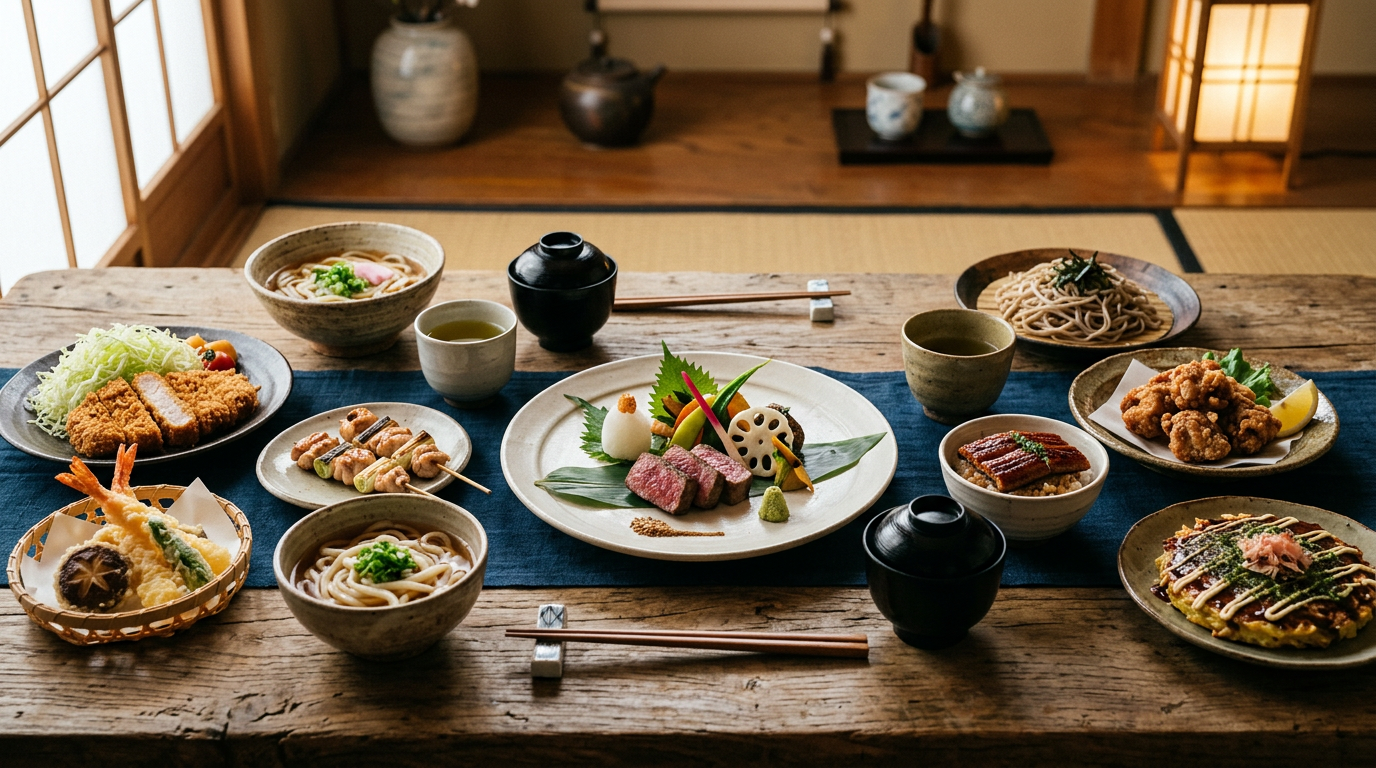
Beyond Sushi and Ramen: 10 Japanese Dishes You Should Know Before Choosing a Restaurant
Sushi and ramen may be the most famous Japanese foods abroad, but they represent only a small part of Japanese cuisine. From teishoku and tonkatsu to yakitori, soba, tempura and donburi, this guide introduces ten essential Japanese dishes and dining formats that can help you choose a better, more authentic Japanese restaurant.